Make a farm animal aftercare plan now, while everyone's healthy
Some states give you as little as 48 hours[1] to deal with a dead animal, and a goat or pig rarely dies at a convenient hour. A one-page plan written on a calm day turns a frantic weekend into a few phone calls.
By the Farm Animal Cremation Services editorial team · Updated September 24, 2026 · 7 min read · Sources
- The phone list and questions to settle in advance
- Access, moving and hot-weather steps by species
- Budget, pre-pay pros and cons, and a plan template

The short answer
Why plan aftercare while your animals are healthy?
Because farm species leave you very little time. A plan should name who you'll call, which provider accepts your species at its weight, how the body will be moved and kept cool, what you're willing to spend, and whether you want ashes back. Settle those five things now and the day itself becomes manageable.
The deadlines are real. Pennsylvania requires a dead domestic animal to be disposed of within 48 hours[1], and several California counties allow only 24-48 hours[2] before penalties apply. A 200 lb pig that dies on a Friday evening in July is not the moment to discover your nearest pet crematory stops at 150 lb. Both rules are summarized by Penn State Extension and UC Agriculture and Natural Resources.
Planning also protects the decision itself. Grieving people tend to take the first option offered: in UK research, 89%[3] of pet cremation buyers never compared providers. Doing the comparison ahead of time means you choose, rather than accept.
Step one
Who belongs on your aftercare phone list?
- Your farm vet, plus their after-hours number. Ask whether they do farm-call euthanasia for your species and which aftercare providers they work with.
- Two cremation providers that take farm species. Note each one's weight limit, whether they collect, and roughly how far they'll drive.
- A fallen-stock or rendering collector as a backup, even if you'd prefer cremation. Some regions have none, so find out now.
- Someone with a tractor, loader or winch who can help lift a heavy animal. Often a neighbor.
- Your state veterinarian's office for poultry keepers, in case of sudden flock deaths that could be bird flu. Our backyard chicken guide lists the warning signs.
- Your insurer, if any animal is insured. Many policies want to hear before euthanasia, not after.
- A helper who can hold the fort so someone stays with the herd while another deals with the body.
When you call providers, ask the questions that trip farm keepers up: the maximum weight they cremate individually, whether they'll accept an animal euthanized with drugs, what a farm collection costs, and how long ashes take to come back. Our list of questions to ask a farm animal cremation provider goes further.
Weights and gateways
Can a truck reach the body, and how will you move it?
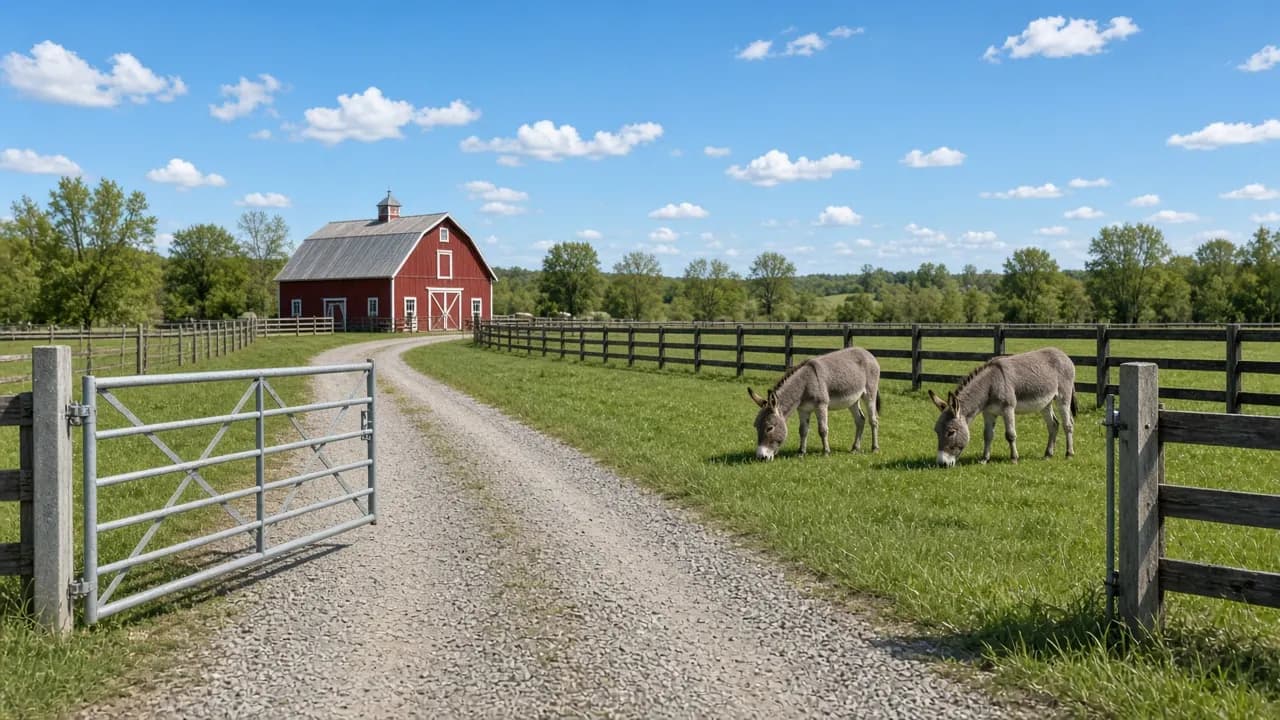
Walk your place with a collector's eyes. Where are your older animals most likely to lie down for the last time: a back stall, a far corner of the pasture, under a hedge? Could a pickup with a winch or a small box van get within 20 feet? Measure gate widths, note soft ground that turns to mud in spring, and pick a hard, shaded spot near the drive where a body could be moved and kept until collection.
| Animal | Typical adult weight | Moving notes |
|---|---|---|
| Backyard hen or duck | 4 to 8 lb | One person with a box. Keep separate if death was sudden. |
| Nigerian Dwarf or pygmy goat | 50 to 80 lb | Two people and a tarp or feed-sack sling. |
| Standard dairy goat or pet sheep | 120 to 200 lb | Tarp plus a sled, garden cart or truck ramp. |
| Pot-bellied or kunekune pig | 100 to 250 lb | Low and dense; hard to grip. A plastic sled works well. |
| Alpaca / llama | 100 to 190 lb / 250 to 450 lb | Long neck and legs; fold them before stiffness sets in. |
| Standard donkey | 400 to 500 lb | Needs a winch, loader or specialist crew. Mammoth donkeys weigh far more. |
Weight also decides who can take your animal. Once you're over about 150 lb, many small-animal crematories bow out, and you'll need one with a larger chamber or equine experience. Our transport and logistics article covers lifting, slings and collection in detail.
Summer and weekends
What's your plan if an animal dies on a hot weekend?
Heat is the biggest practical enemy. Ruminants like goats and sheep bloat quickly after death as the rumen keeps fermenting, and a large body holds heat for hours (what to do when a pet goat dies covers keeping the body cool). Most owners also want things to move fast: in one US survey, the most common wish, at 26.1% of owners, was for a pet to leave the vet's within 24 hours[5].
- Pick the shadiest hard-standing spot in advance and keep a large tarp there in summer.
- Stock bags of ice or frozen water jugs from May to September for smaller animals.
- Ask your vet whether they can hold a body in a cold room, and up to what weight.
- Find out which providers collect on weekends and what that costs. One retailer's guide says rush service at pet crematories often adds $50 to $150[6].
- Know your fallback: if cremation can't happen in time, which legal option comes next?
Keep the same notes on whether burial is even allowed. England bans burying fallen farm stock, including pet goats, sheep and pigs, though horses and donkeys are exempt[7]. In the US it depends on the state: Michigan, for instance, requires burial within 24 hours, at least 2 feet deep and 200 feet from a well[8]. Check your own county before you count on it.
Money
How much should you budget, and is pre-paying worth it?
Cremation is priced mainly by weight, so a hen and a donkey sit at opposite ends. Published US price bands for companion animals give a starting point: communal cremation at $50 to $100 and private at $200 to $300 for pets of 51 to 70 lb[9], rising to $150 to $200 and $350 to $450 for animals over 90 lb[10]. Farm species above that, plus a farm collection, are quoted individually, so get written figures now.
Choosing communal cremation saves a lot; UK regulators found it two to five times cheaper than the individual equivalent[11]. Use the cremation cost calculator to rough out numbers for each animal, and read the farm animal cremation cost guide for how to compare quotes line by line.
Our estimate from published US bands: private cremation runs roughly $9.20 per pound of body weight for a 15 lb pet, but only about $4.00 per pound at 100 lb[12]. So a 150 lb ewe costs more than a cat, but nowhere near ten times as much.

Free tool
Cremation cost calculator
Estimate a realistic price range for your pet's size, location and the type of cremation.
| Pre-paying can help | Pre-paying can backfire |
|---|---|
| Locks in today's price if the provider honors it in writing | The provider may close, merge or stop taking large animals |
| One less decision and payment on a terrible day | Refund terms are often unclear if you move away |
| Confirms in advance that they accept your species and weight | Weight can change a lot in old age, changing the price |
A middle path works for many keepers: don't pre-pay, but set aside a small fund, keep a written quote on file and refresh it once a year. Our poll results show how many keepers already have a plan.
Do you have a plan for when one of your older animals dies?
Tap an answer to vote and see how others answered. Anonymous.
Everyone's say
What does your family want, including the kids?
Decide now, over a calm dinner, whether you'd want the animal's own ashes back. That one choice decides whether you need private cremation and most of the cost. Our private versus communal article sets out the difference. Private ashes usually come back in 5-10 days[13], so you can plan a scattering or burial of ashes around that. Our services page explains each route.
- Who would like to be present for euthanasia, and who would rather say goodbye beforehand?
- Should the closest herd mate see the body before it leaves?
- Which keepsakes to take first: fleece, mane, feathers, an ear tag or hoof print?
- Where would ashes or a marker go? A favorite paddock, the orchard, a memorial corner?
- Is there a child who raised this animal and should help plan the goodbye?
Children cope better when they know the plan exists. Our guide to farm kids and animal loss covers how to involve them at each age.
Write it down
What goes in a written aftercare plan, and when should you review it?
Keep one page per older animal, taped inside the feed room door and saved on your phone. Include:
- Animal's name, species, breed, age and current weight (weigh tape is fine)
- Ear tag, scrapie tag or microchip number, plus insurance policy number if any
- Vet and after-hours numbers, with the two cremation providers and one fallback
- Chosen aftercare: private, communal, burial where legal, or collection
- Budget ceiling agreed by the family
- How the body will be moved, by whom, and the holding spot
- Hot-weather steps and weekend contacts
- Keepsakes to take and who takes them
- Where ashes or a marker will go
Review the plan twice a year. Late spring, before summer heat: confirm weekend collection and restock ice. Autumn, before the ground freezes: if burial is your fallback, frozen ground in northern states can make digging impossible until March. Also review whenever an animal passes about 10 years for goats and sheep, 12 for pigs and alpacas, or 25 for donkeys, or after any diagnosis like kidney disease, arthritis or repeated bloat.
The livestock mortality planner helps you weigh collection, burial and cremation for your setup. When you want real names and prices for your list, send us your animals' details and we'll email options from providers near you, or start with local rules and providers.

Free tool
Livestock mortality planner
Plan disposal capacity and costs for farm losses, from one animal to a herd.

Reader polls
What would you choose?
Vote anonymously and see how other readers answered. The results are live counts from people who visit this site, so they show real opinions, not a scientific sample.
Do you have a plan for when one of your older animals dies?
Tap an answer to vote and see how others answered. Anonymous.
Would you pre-pay for aftercare while your pet is still healthy?
Tap an answer to vote and see how others answered. Anonymous.
When did you (or will you) decide on aftercare?
Tap an answer to vote and see how others answered. Anonymous.

Free tools to help you plan
Cremation cost calculator
Estimate a realistic price range for your pet's size, location and the type of cremation.
Livestock mortality planner
Plan disposal capacity and costs for farm losses, from one animal to a herd.

Ashes weight estimator
See roughly how much ash to expect back, by species and body weight.
Questions people ask
Can I pre-arrange cremation for a pet goat or pig?
Often, yes. Many crematories that take farm species will confirm acceptance, give a written quote and note your details on file, even if they don't sell formal pre-paid plans. Ask about weight limits, collection distance and weekend service. Get the quote in writing and date it, then check it once a year as prices and your animal's weight change.
What should I do if my animal dies before I've made a plan?
Move the body into shade, cover it and call your vet first; they can usually name local options. Then phone two or three providers for prices and collection times, and check your state's disposal deadline. If cremation isn't possible in time, ask about fallen-stock collection or legal burial as a fallback while you decide.
How far ahead should I plan for an elderly donkey?
Start as soon as your donkey is in the second half of life, often around 20. Donkeys are stoic and can hide illness, so a sudden decline is common. Because a standard donkey weighs several hundred pounds, confirm now that a provider with a large chamber and lifting equipment will come to you.
Do I need a plan for backyard chickens?
A short one. Hens are easy to move, but sudden deaths in a flock can signal bird flu, which must be reported. Keep your state vet's number on the list, a box and gloves in the shed, and a decision on whether you'd want individual cremation, burial where allowed, or a communal option for each bird.
Is it morbid to plan aftercare for a healthy animal?
No more than writing down the vet's number is. Keepers who plan usually find the day itself calmer, because the hard decisions were made when they could think clearly. Many say it let them spend the last hours with their animal instead of on the phone. You can file the plan and not look at it for years.
Should the aftercare plan cover every animal or just the old ones?
Cover the whole place in one sheet of contacts and fallbacks, then add a page for each animal over middle age or with a known condition. Young stock and poultry can share a general plan. Accidents and predators don't wait for old age, so having the basic phone list done matters more than the detail.


Sources and our estimates
- [1] Pennsylvania requires a dead domestic animal to be properly disposed of within 48 hours of death. Penn State Extension - Livestock and Poultry Mortality Disposal in Pennsylvania (J. Craig Williams, updated Oct 2025), 2025.
- [2] Several California counties give owners 24 or 48 hours to dispose of a dead animal before penalties apply. UC Cooperative Extension (Schohr, Lile, Snell) - Livestock Carcass Management, UC ANR 2021, 2021.
- [3] 89% of UK owners who bought a pet cremation did not compare different providers; 9% did. UK Competition and Markets Authority - Veterinary services for household pets, Provisional decision report Part A (Oct 2025), 2025.
- [4] Since 2003 the FDA has required euthanasia drug labels to warn that euthanized animals must be disposed of by deep burial, incineration or another approved method to keep scavenging wildlife from eating the carcass. Cornell Waste Management Institute & Penn State - Horse Mortality: Carcass Disposal Alternatives (2012), 2003.
- [5] The most common owner preference (26.1%) was for a deceased pet to stay at the vet hospital less than 24 hours before transport to the crematory or cemetery; a further 18.1% said no more than 1-2 days. Cooney, Kogan, Brooks, Ellis - Pet Owners' Expectations for Pet End-of-Life Support and After-Death Body Care, Topics in Companion Animal Medicine (2020), 2020.
- [6] Rush 24-hour pet cremation typically adds $50–$150; standard turnaround is about 7 days. Memorials.com – Pet Cremation Cost Guide 2026, 2026.
- [7] England bans the burial or open burning of fallen farm stock, but pet animals may be buried, and England (unlike Scotland and Wales) allows burial of both pet and non-pet horses. GOV.UK (Defra/APHA) - Fallen stock guidance, 2024.
- [8] Michigan requires dead animals to be buried within 24 hours, at least 2 feet deep and not within 200 feet of a well, with no more than 100 burial sites or 10,000 lb of animals per acre. Michigan Farm News (Michigan Farm Bureau) - MDARD reminder: Animal burial options, 2024.
- [9] CareCredit lists US communal cremation at $50-$100 and private at $200-$300 for 51-70 lb pets. CareCredit (Synchrony) - How Much Does Pet Cremation Cost? (Sept 2023), 2023.
- [10] CareCredit lists US communal cremation at $150-$200 and private at $350-$450 for pets over 90 lb. CareCredit (Synchrony) - How Much Does Pet Cremation Cost? (Sept 2023), 2023.
- [11] The CMA found communal cremations are two to five times cheaper than the individual equivalent for the same pet weight. UK Competition and Markets Authority - Final report Appendix K: Cremations pricing, mark-ups and costs (24 Mar 2026), 2026.
- [12] Private cremation cost per pound falls with size in the US: roughly $9.2/lb for a 15 lb pet, $4.2/lb at 60 lb and about $4.0/lb at 100 lb. Our estimate: band midpoint price / representative weight: 0-30 lb (midpoint $137.50 / 15 lb) = $9.17/lb; 51-70 lb ($250 / 60 lb) = $4.17/lb; over 90 lb ($400 / ~100 lb) = $4.00/lb. How we calculate.
- [13] A US aftercare guide says many families receive private cremation ashes within about one to two weeks, with 5-10 days commonly quoted. Funeral.com - Pet Cremation Timelines: How Long Until Ashes Are Returned, 2026.
Start your plan with local options
Tell us what you need and where you are. We'll reply by email with clear options and prices so you can decide in your own time.