Guides for keepers saying goodbye to a farm companion
Farm animals don't fit the dog-and-cat rules: a goat may need moving within 24-72 hours[1] and a pig can outweigh a person. These longer guides take one big question at a time and work it through properly.
By the Farm Animal Cremation Services editorial team · Updated September 24, 2026 · 4 min read · Sources
- Longer reads for decisions that need thought
- Written for goats, sheep, pigs, camelids and hens
- Sourced figures, with our estimates labeled
Start here
What do these farm animal guides cover?
Each guide tackles a question that takes more than a quick answer: what the whole end-of-life bill looks like for a named farm animal, how to help children who raised a bottle lamb or showed a goat, and how to mark an animal's place on land that's still being grazed and mown. They're written for people who keep a few animals as companions, not for commercial herds.
If you need a quick, practical answer instead, the blog has shorter articles on costs, collection and what happens during cremation. And if your animal has died today, our services page sets out your options in one place, or you can send us the details and we'll reply by email.
All guides
In-depth guides to the decisions families face, written in plain English.
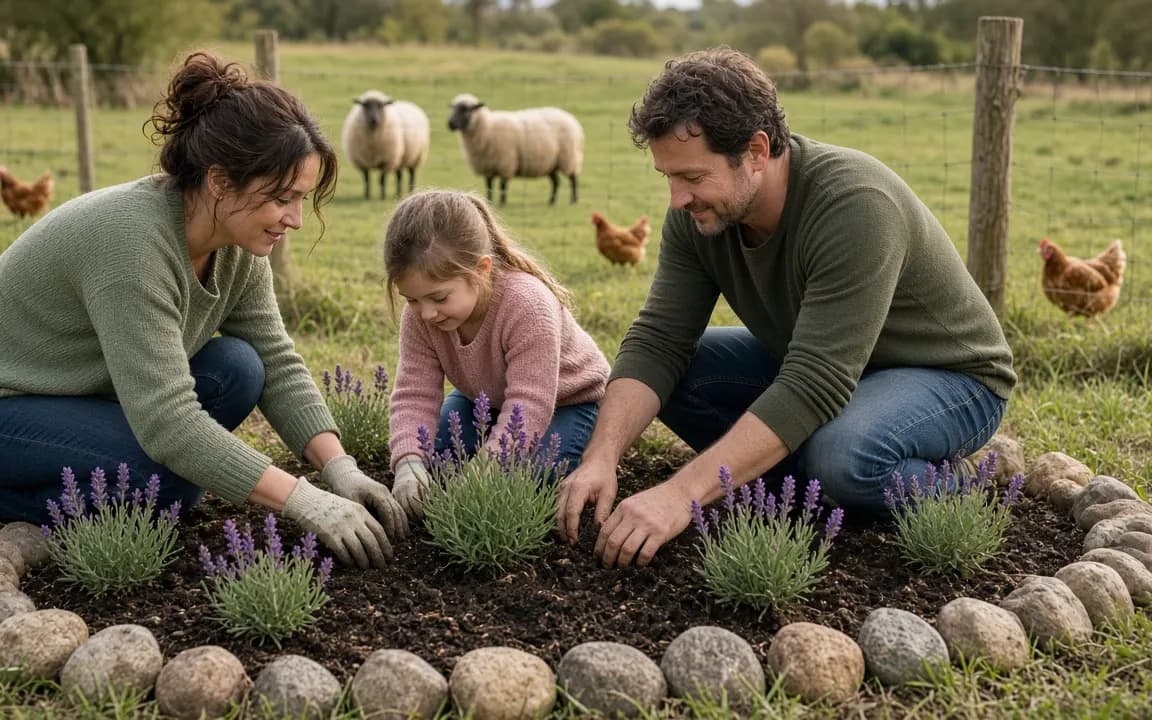
Creating a memorial corner on your farm, for every animal over the years
Plan one quiet corner of the farm for every animal you lose over the years: choosing the spot, a layout that grows, livestock-safe plants and small rituals.
What it really costs when a farm companion dies
What a named goat, pig, alpaca, donkey or hen really costs at the end: vet call, collection, cremation by weight, urn, plus cheaper routes compared.
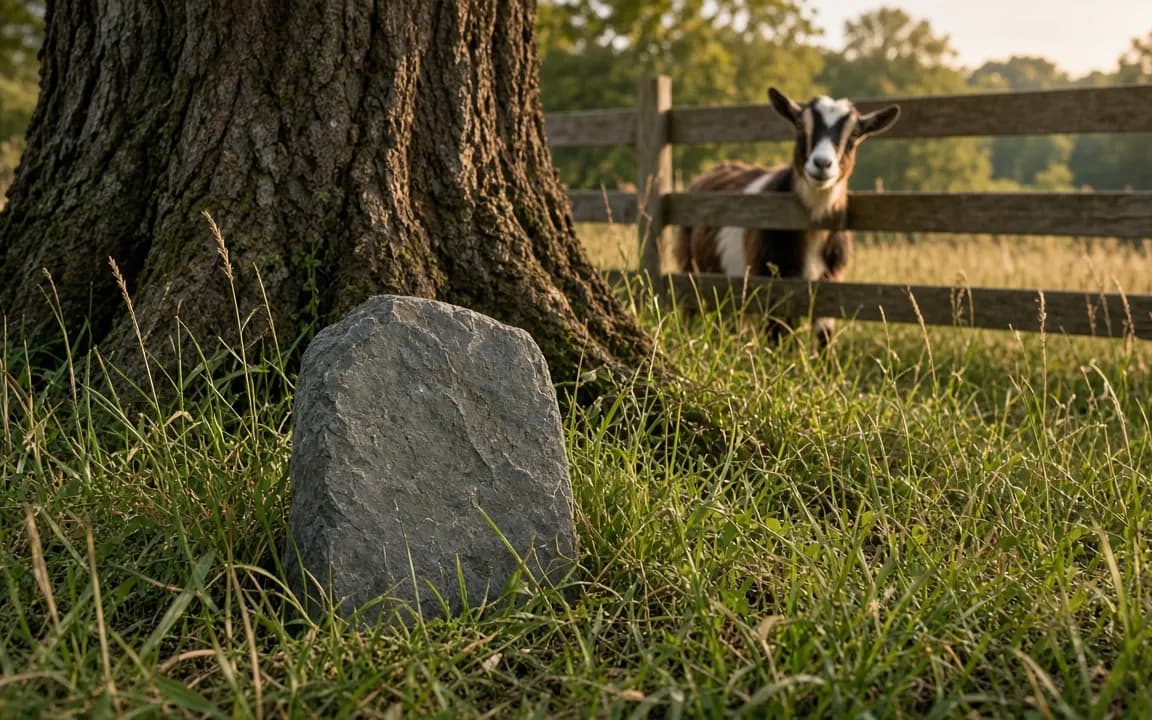
Outdoor memorial markers that last on a working farm
Stone, slate, granite, iron or a tree: which outdoor markers survive frost, mowers and curious goats, where to put them on a farm, and what they cost.
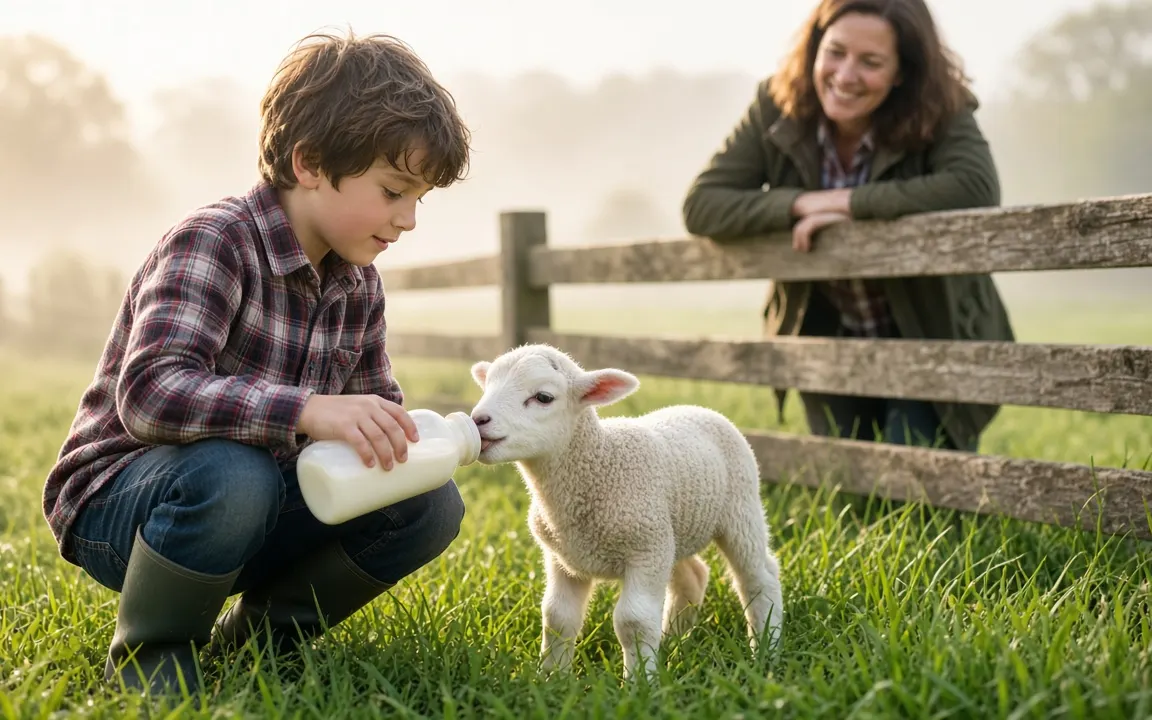
When your child's goat, lamb or hen dies: a family plan for farm kids
When a child's 4-H goat, bottle lamb or favorite hen dies: what to tell them, whether they see the body, who does chores and how kids can help remember.
Money
How much will aftercare cost, and how can you plan for it?
Farm species sit awkwardly between pet and equine price lists, so costs are rarely published. Our guide to hobby-farm companion cost factors builds a full budget from the vet visit to the urn, with worked examples for a pygmy goat, an alpaca, a kunekune pig, a donkey and a trio of hens.
$600-$1,000[2]
For a quick figure for your own animal's weight, try the cremation cost calculator. It gives a range in about a minute, which you can then check against written quotes.

Free tool
Cremation cost calculator
Estimate a realistic price range for your pet's size, location and the type of cremation.
Families
How do you help children when a farm animal dies?
Children on smallholdings often have a closer bond with animals than anyone realizes: they feed them, name them, walk them at shows and sit in the straw with them. They also know that some farm animals are raised for meat, which can make a pet's death confusing. Parents feel the gap in advice too: 93.4%[3] of parents in a large RSPCA survey wanted better guidance on helping children through pet loss.
Our guide to kids and named farm animal loss sets out a family plan by age, from whether children see the body to how they can help with a memorial. For the words themselves, the companion article on talking with children about losing a farm animal has gentle scripts for the hardest questions.
Remembering
How can you remember an animal on the farm itself?
Many keepers want the animal to stay part of the land. Two guides help with that. Outdoor markers for hobby-farm companions compares stone, slate, granite, iron and trees for durability against frost, mowers and climbing goats. Creating a farm memorial corner plans one space for every animal over the years, with plants that are safe near grazing stock.
Memorials needn't be expensive. Engraved natural stones cost about $38–$115[4] from one US maker, and a fieldstone from your own land costs only the engraving. The memorial budget planner adds a marker, urn and cremation together.
Which keepsake would mean the most to you?
Tap an answer to vote and see how others answered. Anonymous.
Why farm animals need their own guides
Why doesn't dog and cat advice work for goats and pigs?
Three things change. The law: in England, pigs, sheep and goats kept as pets are still treated as farmed animals, so England's ban on burying fallen farm stock[5] applies and burying them at home generally isn't allowed. The clock: ruminants bloat quickly, and US states commonly expect disposal within one to three days. The weight: a pot-bellied pig or an alpaca can weigh as much as a person, which changes who can collect it and what it costs. GOV.UK's fallen stock guidance has the details.
Then there's the herd. Goats, sheep, alpacas and donkeys are social animals who notice when a companion disappears, and they can fret, call or stop eating. Several of the guides and blog articles cover how to support the animals left behind, alongside the people. For the rules where you live, see our local pages.
Before today, did you know the burial rules for farm species where you live?
Tap an answer to vote and see how others answered. Anonymous.
How we write them
How do we research and check each guide?
Every figure in these guides links to its source, from government regulators and university extension services to published price lists. Where no one has measured something for farm species, we say so and show our working, labeled as our estimate. Horse cremation, for example, works out to roughly $0.80/lb[6] at midpoint prices, and we use that sort of calculation to fill gaps honestly rather than guess.
Before you need it
Is it worth reading these guides before an animal dies?
Yes, if you can bear to. Most people feel it coming: 75.4%[7] of bereaved owners in the RSPCA's pet bereavement survey had experienced grief before their pet actually died. A plan made in a calm week, with phone numbers written down and a budget in mind, saves frantic calls on a hot Saturday.
Our article on pre-planning farm animal aftercare turns that into a simple written plan, and the planning page gathers the tools in one place. You can also see how other keepers answered our planning poll on the results page.
Do you have a plan for when one of your older animals dies?
Tap an answer to vote and see how others answered. Anonymous.

Reader polls
What would you choose?
Vote anonymously and see how other readers answered. The results are live counts from people who visit this site, so they show real opinions, not a scientific sample.
Do you have a plan for when one of your older animals dies?
Tap an answer to vote and see how others answered. Anonymous.
Which of your animals are you thinking about today?
Tap an answer to vote and see how others answered. Anonymous.
When did you (or will you) decide on aftercare?
Tap an answer to vote and see how others answered. Anonymous.


Questions people ask
What's the difference between the guides and the blog?
The guides are longer and work through a bigger decision, such as budgeting for aftercare or planning a memorial space, in depth. The blog answers one specific question at a time, like how to compare quotes or what happens during cremation. Both are written for farm species and link to each other where a topic overlaps.
Are these guides written for commercial farms?
No. They're written for people who keep goats, sheep, pigs, alpacas, donkeys or poultry as companions, often alongside a few working animals. Commercial mortality management has different rules, scales and support. Some figures, like composting and rendering costs, come from farm research because that's where the evidence exists.
Do the guides apply outside the US?
Most practical advice applies anywhere, and we mention UK and England rules where they differ sharply, such as the ban on burying pet pigs, sheep and goats. Prices are mostly in US dollars. Always check local rules with your vet or animal health authority before burying or composting an animal.
Can you recommend a crematory in my area?
We don't rank or endorse individual businesses, but we can help you find providers that take farm species where you live. Send us the species, a rough weight and your location, and we'll reply by email with options and prices from providers serving your area, along with questions worth asking each one.
How often are the guides updated?
We review each guide when prices, rules or research change, and every page shows the date it was last checked. Cremation and collection prices move with fuel and local costs, so use our figures as a planning range and ask any provider for a current written quote before you decide.


Sources and our estimates
- [1] State rules commonly require dead animals to be buried within 24 to 72 hours of death, especially when euthanized. Cornell Waste Management Institute & Penn State - Horse Mortality: Carcass Disposal Alternatives (2012), 2012.
- [2] Cremating a 1,000-pound horse was reported to cost about $600-$1,000, depending on location and the price of propane. Extension Horses (eXtension national Cooperative Extension) - Horse Disposal Options, 2019, 2019.
- [3] 93.4% of parents in the RSPCA survey wanted better guidance on helping children through pet loss. RSPCA — Pet Loss Survey Results, 2026.
- [4] Adirondack Stone Works sells engraved natural-stone pet memorials from $38 (6–7 inch mini) to $115 (13–14 inch large), with 1–4 lines of text included. Adirondack Stone Works Pet Memorials, 2026.
- [5] England bans the burial or open burning of fallen farm stock, but pet animals may be buried, and England (unlike Scotland and Wales) allows burial of both pet and non-pet horses. GOV.UK (Defra/APHA) - Fallen stock guidance, 2024.
- [6] Midpoint horse cremation cost works out to about $0.80 per pound of body weight, versus about $0.14 per pound for rendering pickup and $0.23 per pound for on-farm composting. Our estimate: cremation $800 / 1,000 lb; rendering $137.50 / 1,000 lb; composting $275 / 1,200 lb. How we calculate.
- [7] 75.4% of RSPCA pet-loss survey respondents experienced anticipatory grief before their pet died. RSPCA — Pet Loss Survey Results, 2026.
Get farm animal aftercare options by email
Tell us what you need and where you are. We'll reply by email with clear options and prices so you can decide in your own time.