Creating a memorial corner on your farm, for every animal over the years
Keep animals long enough and you will lose several. In the RSPCA's large pet-loss survey, 99.3%[1] of owners saw their animal as family, a friend or a companion, and a farm memorial corner gives every one of them a place.
By the Farm Animal Cremation Services editorial team · Updated September 24, 2026 · 6 min read · Sources
- Choosing a spot that works in every season
- A layout that grows as the years go by
- Plants that are safe around grazing animals
The short answer
What is a farm memorial corner, and why make one?
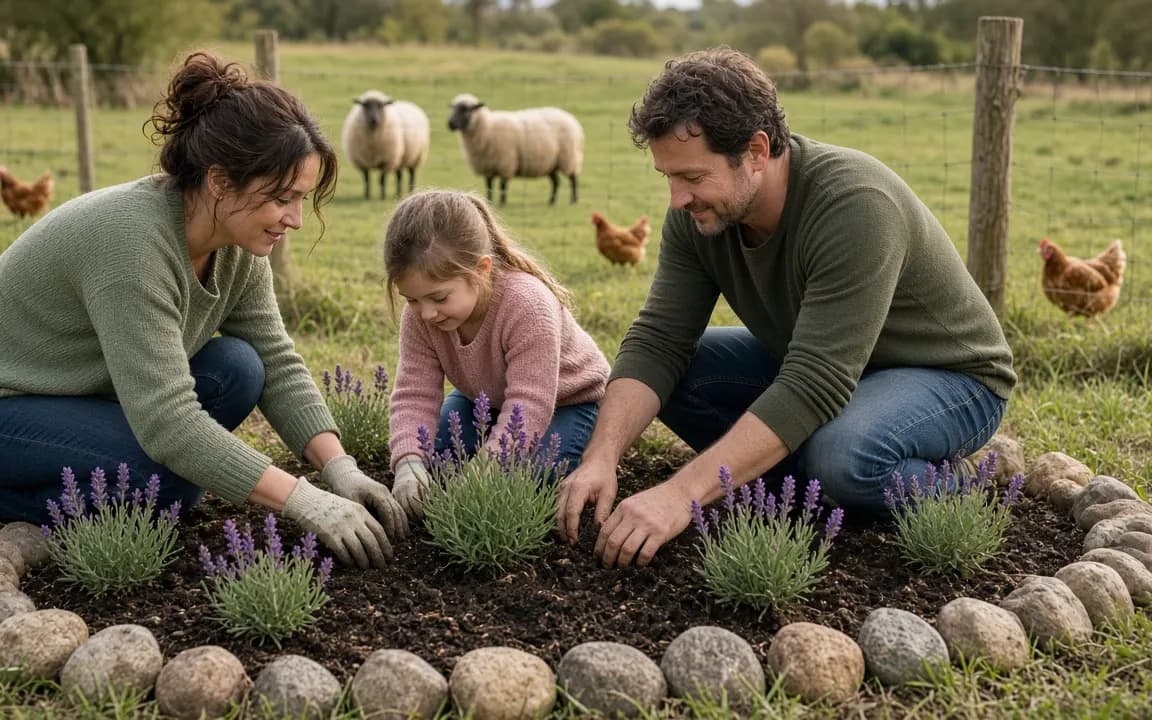
A memorial corner is one small, planned space on your land where the ashes, markers and plants for all your animals come together over time. Instead of a stone here and a tree there, you choose a single spot, lay it out so it can grow, and plant it with things that are safe for the animals still grazing nearby. It becomes a place to visit on the feed round, not just on sad days.
It suits smallholdings especially well, because farms lose animals regularly. A flock of hens, a pair of wethers and an old pony will not all live the same span, and a shared space means no one gets forgotten in a far paddock. If you want ideas for a single marker instead, our guide to outdoor markers for farm companions compares materials and costs. In the RSPCA's pet bereavement survey, most owners described their animal as family or a companion, and on a farm those losses add up over the years.
Location
How do you choose the right spot on your land?
Walk the farm in the worst weather you can and notice where you would actually go. A corner that looks perfect in June may be under water in February or snowed in behind a gate in January. The right place is somewhere you already pass, on ground that drains, just outside the grazing.
- Near a daily route. By the path to the hen house or on the way to the hay barn, so you see it without making a trip.
- Well drained and slightly raised. Wet ground heaves stones in frost and drowns plants.
- Outside the fence. Grazing animals will eat plants, climb markers and nibble ribbons.
- Clear of water. Keep well away from wells, springs, streams and troughs.
- With a view. Many families face it toward the pasture, so the corner looks out over the animals' old ground.
Design
How do you lay out a corner that can grow for years?
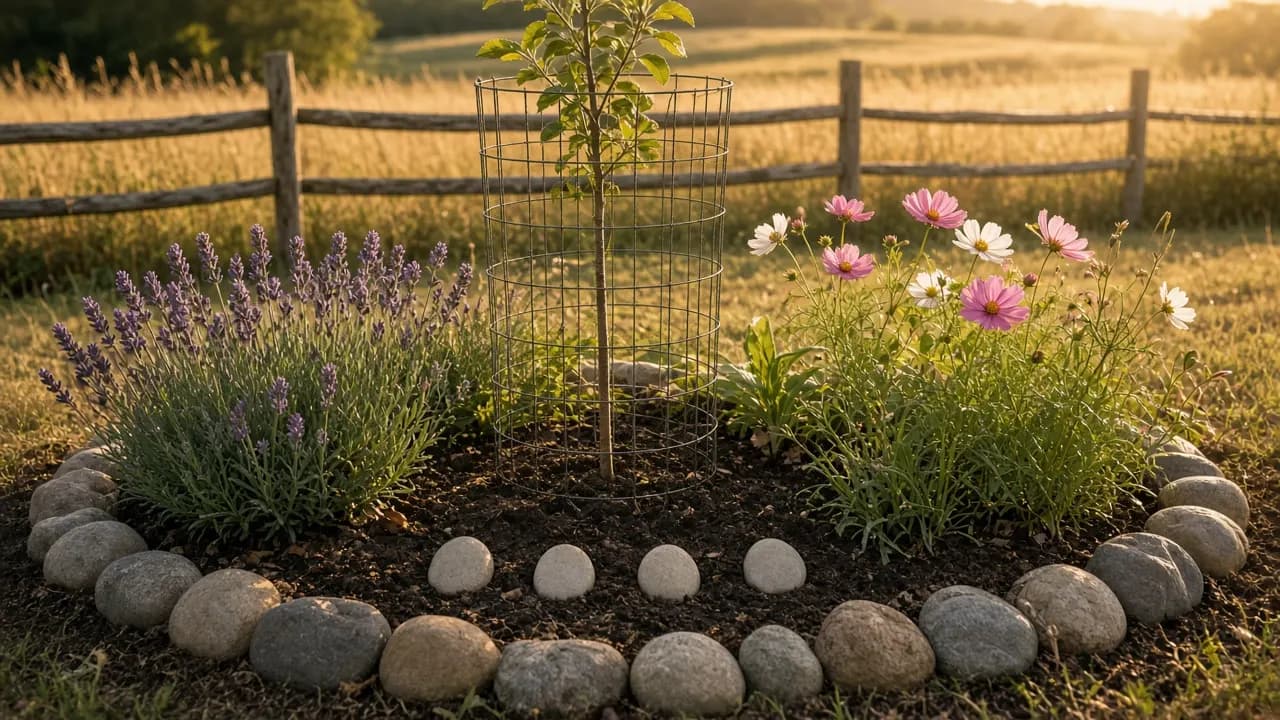
Plan for more animals than you have now. A simple frame, like a curved stone edge, a short row of posts or a low hedge on two sides, gives the space shape from the start, and new markers slot in without it looking crowded.
- An anchor. One tree, a large boulder or a bench gives the corner a center. Everything else arranges around it.
- A row or arc of stones. Leave space between each for planting and for ashes to be dug in. A foot or so apart works well for small stones.
- A naming board or wall. For flocks, where one stone per hen isn't practical, a painted board or a slate with names added over the years honors everyone.
- A path in. Stepping stones or a mown strip make it inviting and protect the planting.
Engraved garden stones start from $38.95[2] at one US retailer, so a corner can begin with something small and simple. If budget is tight now, a painted wooden marker holds the place until a stone is made. By our estimate, the median starting price across three US sellers is about $39[3], so adding a stone for each animal you lose is a modest cost spread over the years.
Planting
Which plants are safe near goats, sheep and alpacas?
A memorial corner sits right next to animals who will lean through the fence for anything green. Some classic memorial plants are dangerous to livestock, so check every plant before it goes in. When in doubt, ask your vet or local extension office.
| Often used in memorial gardens | Why to avoid near livestock | Gentler alternatives |
|---|---|---|
| Yew | Highly toxic to goats, sheep, camelids and horses, even in small amounts | A fruit tree such as apple, fenced while young |
| Rhododendron and azalea | Toxic to goats and sheep | Lavender or native grasses |
| Oleander | Toxic to most animals | Sunflowers or cosmos in summer |
| Cherry laurel | Leaves can be toxic to ruminants | A native hedge species you've checked locally |
| Foxglove and lily of the valley | Toxic to many animals | Calendula, cosmos or a pollinator seed mix you've checked |
Pollinator plants are a popular choice because the corner becomes busy and alive in summer. Many keepers also plant something that flowers in the month an animal died, so the corner marks each anniversary on its own.
The ashes
How do ashes fit into a shared memorial space?
Farm animals leave more ash than most people expect. Remains weigh about 3-5% of body weight[4], so a 90 lb goat returns around three to four pounds and a large pig much more. That's a lot for one small bed, so plan where each animal's ashes will go.
Raw ashes are strongly alkaline, at a pH of ~11.7[5], so don't pour them straight onto roots. Dig them into a generous amount of soil or compost, or use a product designed to balance cremated remains. Gardening guidance suggests letting that mix sit for 90–120 days[6] before planting into it. Some families bury each animal's ashes beneath its stone, then plant around the edges once the soil has settled.
Free tool
Ashes weight estimator
See roughly how much ash to expect back, by species and body weight.
To bring ashes home at all, you'll need a private cremation. Our article on private vs communal cremation for farm animals explains the difference, and the ashes weight estimator above gives you a figure for your animal.
Keeping it alive
What small rituals make a memorial corner feel like yours?
The corner matters most when it's used. Rituals don't need to be solemn; on a farm they often fit into the work you already do.
- A yearly tidy. One spring morning to weed, re-edge and add names to the board.
- Children's stones. Kids can paint a river stone for an animal they loved. Our guide on kids and farm animal loss has more ideas for involving them.
- Something from the animal. An ear tag, an old goat bell or a worn halter hung on the fence post nearby.
- Feathers and fleece. A wind chime of hen feathers or a small bundle of fleece tucked under a stone, replaced when it weathers.
- A first bucket. Some keepers put out a little feed on the anniversary for the rest of the flock, at the corner fence.
The corner grows the way the farm does: slowly, one season at a time.
Which keepsake would mean the most to you?
Tap an answer to vote and see how others answered. Anonymous.
Thinking ahead
What happens to the memorial corner if you move?
It's worth planning for, because many smallholders sell up or downsize eventually. Stones, boards and bells can come with you. Ashes that have been dug into soil can't, which is one reason some families keep a small portion of each animal's ashes in a keepsake urn indoors, and put only part into the ground.
If you do leave the corner behind, a tree stays as a living memorial, and a note for the next owners explaining what the stones mean is a kind gesture. Our memorial budget planner helps you balance a keepsake urn, garden stones and plants. When the time comes for your next goodbye, tell us about your animal and we'll reply by email with cremation options, or read about the services available for farm animals. The poll results show where other keepers chose to keep ashes.
Do you keep more than one memorial for the same pet?
Tap an answer to vote and see how others answered. Anonymous.

Reader polls
What would you choose?
Vote anonymously and see how other readers answered. The results are live counts from people who visit this site, so they show real opinions, not a scientific sample.
Which keepsake would mean the most to you?
Tap an answer to vote and see how others answered. Anonymous.
Do you keep more than one memorial for the same pet?
Tap an answer to vote and see how others answered. Anonymous.
Which memorial feels most like your pet?
Tap an answer to vote and see how others answered. Anonymous.


Questions people ask
How big should a farm memorial corner be?
Smaller than you think, at first. A bed of about six by ten feet, with a tree or boulder at one end, holds a good number of stones and plantings. Leave room along one side to extend it. For flocks of hens, a single naming board saves space while still recognizing each bird.
Can I bury whole animals in a memorial corner?
That depends on the species and where you live. Many US states allow burial of farm animals with depth, timing and setback rules, while England generally doesn't permit burying pet pigs, sheep or goats on the holding. A memorial corner is far simpler if it holds cremated ashes rather than bodies.
Which tree is good for a farm memorial?
Choose a tree that's safe if animals reach its leaves, suits your soil and climate, and won't grow too large for the spot. Fruit trees such as apple are popular and give something back each year. Avoid yew entirely near livestock. Fence any young tree for its first few years so goats can't strip the bark.
Will ashes harm the plants in my memorial garden?
They can if you use a lot in one place. Cremated remains are very alkaline and salty, so mix them well into soil or compost, or use a product made to neutralize them. Give the mix a few months before planting directly into it. Spread large volumes, such as from a pig or llama, over a wider area.
How do I remember a whole flock of hens without a stone for each?
A shared board, slate or post with names added as each bird dies works well. Some families plant one flower per hen in a single bed, or hang feathers in a wind chime. Communal cremation is also common for poultry, so the memorial may hold names rather than ashes, and that is just as meaningful.


Sources and our estimates
- [1] In the RSPCA's pet-loss survey (over 4,000 respondents), 99.3% saw their pet as family, a friend or a companion. RSPCA — Pet Loss Survey Results, 2026.
- [2] Memorials.com's engraved pet garden stones start at $38.95, cultured-stone markers at $87.95 and flat granite markers at $157.95. Memorials.com – Pet Memorial Stones, 2026.
- [3] Engraved pet garden stones start at about $39 at the median of three US sellers. Our estimate: median of starting prices [$38 Adirondack, $38.95 Memorials.com, $89.99 Comfort Co.]. How we calculate.
- [4] Embrace notes cremated remains typically weigh about 3-5% of the pet's original body weight. Embrace Pet Insurance - Bury or Cremate Your Dog? Costs, Pros & Cons, 2025.
- [5] Cremated remains have a very high pH of approximately 11.7, which is toxic to plants without amendment. Larkspur Conservation — Giving Cremated Remains a New Life Through Science, 2024.
- [6] Gardening Know How advises letting an ash/soil-amendment mixture sit for at least 90 to 120 days before planting. Gardening Know How — Planting With Cremains: Is There a Safe Way to Bury Ashes, 2024.
Arrange cremation with ashes returned
Tell us what you need and where you are. We'll reply by email with clear options and prices so you can decide in your own time.