An independent guide for people whose pets happen to be farm animals
Fewer than half of UK cremation buyers, 47%[1], remember being told about all their options. We exist so that smallholders hear every option, in plain words, before they decide.
- Independent: we don't run crematories or collection trucks
- Every fact linked to a named source
- Free to ask; we reply by email
Who we are
A guide and request service, not a crematory
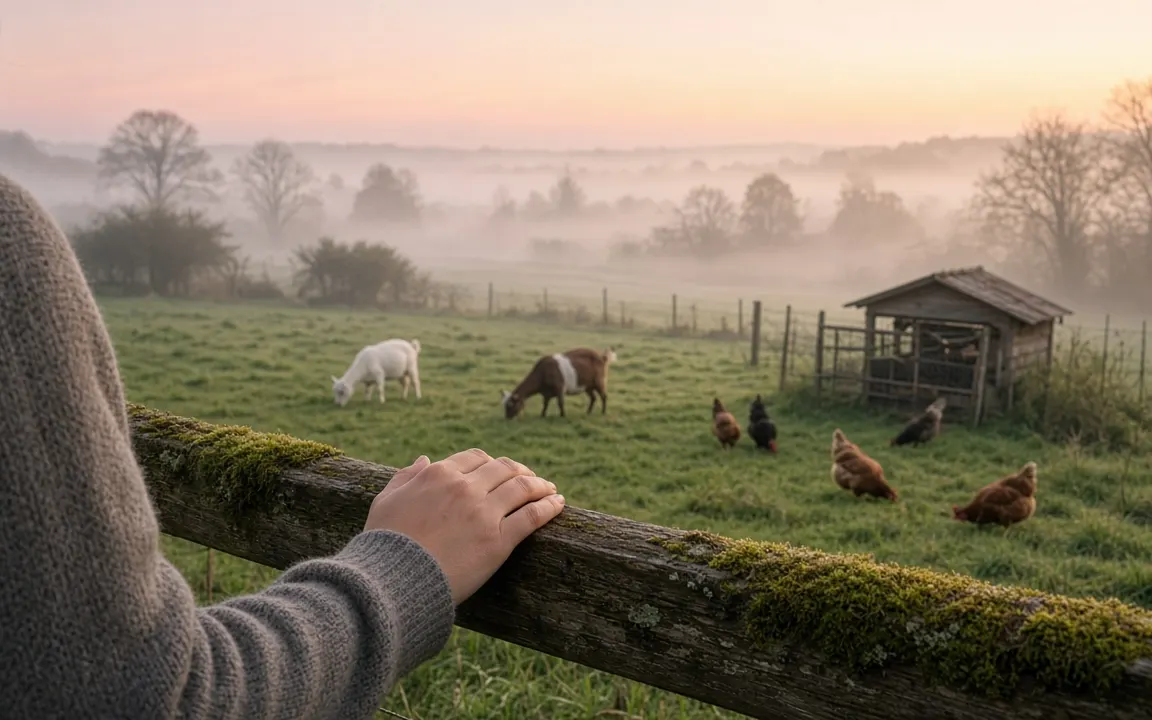
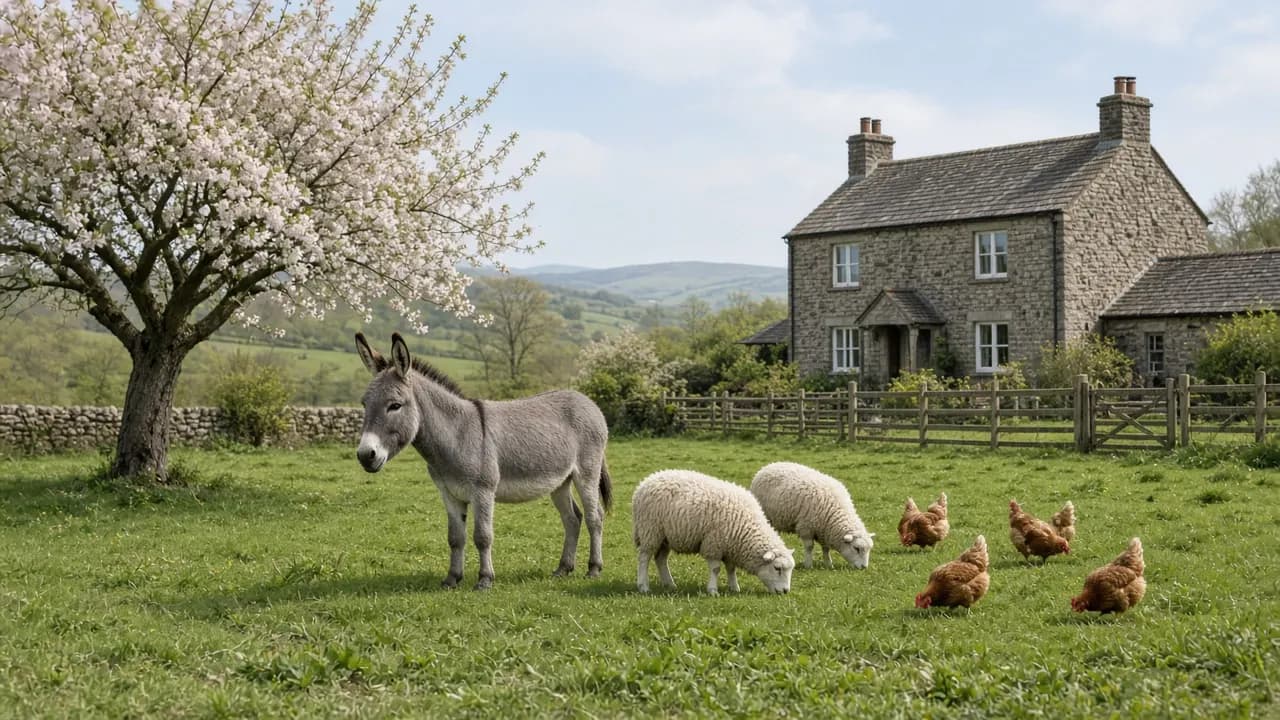
This site is an independent guide to aftercare for animals that live on smallholdings and hobby farms but are loved like pets: goats, sheep, pigs, alpacas, llamas, donkeys and backyard poultry. We explain the options, the rules and the likely costs, and when you ask, we look for providers near you who will actually take your animal.
We don't own a crematory, a collection vehicle or a pet cemetery, and we never perform a cremation. The providers we point you to are separate businesses. You deal with them directly, agree prices with them and pay them, not us.
We cover named companion animals only. Commercial herds, contract mortality and outbreak disposal are a different world, with different rules and buyers. If that's you, the practical pages on on-farm options still help, but a commercial mortality specialist will serve you better than we can.
Why this exists
Why farm pets need their own guide
Almost everything written about pet aftercare assumes a dog or a cat. It assumes the vet will handle it, that burial in the garden is an option and that any crematorium will take your pet. For a smallholder with a much-loved wether goat or a 200 lb pet pig, none of that is safe to assume.
The law usually counts these animals as livestock. Many pet crematories cap weight or refuse certain species. Fallen-stock collectors and renderers are quick but return nothing. And the decision often has to be made within a day, in a field, with other animals watching. We built this guide around that reality.
Unregulated (per APPCC)[2]
How it works
What happens when you send us a request
- You tell us the basics: species, rough weight, where the animal is, and whether you want ashes back.
- We check who can help. That means providers who accept that species at that weight and cover your area, which for farm animals is often a much shorter list than for dogs.
- We reply by email with the options we found, what to ask each one and the price information they publish or give us.
- You choose. You contact the provider, or ask us to pass on your details. Nothing is booked without you.
Sending a request is free. We don't rank providers by who pays, and the facts on this site read the same whoever you end up using. If you'd rather contact providers yourself, our local pages and the contact page explain what to ask.
How we check facts
Where our numbers come from
Every figure marked with a footnote comes from a named source: government agencies such as USDA and APHA, university extension services, the UK competition regulator's pet cremation investigation, and published price studies. You can see the full list on our research page. Two you can open yourself are the USDA's goat and kid death-loss report and the UK government's fallen stock guidance, both of which shape what we say about goats, sheep and pigs.
Prices for farm species are thin on the ground. Few providers publish them, so we often use the nearest published figure, such as large-dog or horse cremation prices, and say so. We won't invent a 'typical goat price' that nobody has measured.
Some numbers are labelled our estimate. These are simple calculations from published inputs, and we show the working. For example, dividing reported horse cremation costs by weight gives about $0.80/lb[3], a rule of thumb that helps when you're pricing a llama or a large pig. Another estimate puts the average market value lost per dead sheep or lamb at about $200 per head[4], a reminder that the cost of aftercare for a pet often exceeds what the animal would sell for, and that's fine.
Our ashes weight estimator and other tools use the same sources and show them in small print under every result.
Editorial standards
What we promise not to do
- We don't publish reviews, star ratings or testimonials, because we can't verify them.
- We don't call any provider the top choice or rank them by who pays.
- We don't promise prices, collection times or availability. We tell you what to ask.
- We don't stretch a UK rule into a US claim, or the other way round.
- We don't tell you what you should feel about a farm animal's death.
Money worries are common and reasonable, so we always show a cheaper option alongside the one with ashes returned. Our planning page helps you think it through before the day arrives.
61%[5]
A pig can be a pet. A goat can be family. The paperwork doesn't get a vote on that.
Your experience matters
How readers shape what we write
We run short anonymous polls for smallholders: which species you keep, what surprised you about the rules, what was hardest on the day. The results aren't scientific, but they show us which questions to answer next. You can watch the tallies change on the poll results page.
If you've spotted an error, a rule that has changed or a provider that no longer takes pigs, tell us through the form. Children often feel the loss of a farm animal deeply too, and our guide on kids and farm animal loss covers how to explain it honestly at different ages.

Reader polls
What would you choose?
Vote anonymously and see how other readers answered. The results are live counts from people who visit this site, so they show real opinions, not a scientific sample.
How do you think of the animal you've lost, or are about to lose?
Tap an answer to vote and see how others answered. Anonymous.
Did you (or would you) compare more than one provider?
Tap an answer to vote and see how others answered. Anonymous.
What helped you most in the first weeks?
Tap an answer to vote and see how others answered. Anonymous.



Questions people ask
Are you a cremation company?
No. We're an independent guide and request service. We don't own crematories, collection vehicles or cemeteries. We explain the options and, when you ask, find providers in your area that accept your species and size of animal. You deal with and pay the provider directly.
Do you cover commercial herds?
Not directly. This site is for named companion animals on smallholdings and hobby farms. Commercial mortality, outbreak disposal and contract collection involve different rules and suppliers. Some of our pages on burial, composting and rendering are still useful background.
Can you help if my animal has already been taken away?
Sometimes. If your vet or a collector has the body but it hasn't been processed yet, there may still be time to switch to a private cremation. Call them straight away and ask them to hold your animal, then tell us where it is and we'll look for a provider who can collect from there.
Why don't you list exact prices for goat or pig cremation?
Because very few providers publish them and prices vary a lot by weight, distance and equipment. Rather than make up a figure, we show the nearest published reference points and help you ask for a written total that includes collection.
Is my information shared with anyone?
Only with your permission. If you ask us to connect you with a provider, we pass on the details needed for them to quote. We don't sell your information or add you to marketing lists.


Sources and our estimates
- [1] Fewer than half (47%) of UK cremation buyers recalled being told about a range of options, including communal cremation or home burial. UK Competition and Markets Authority - Veterinary services for household pets, Provisional decision report Part A (Oct 2025), 2025.
- [2] The APPCC told the CMA that pet cremation in the UK is an unregulated market, with APHA inspections concerned only with basic incineration. Association of Private Pet Cemeteries and Crematoria (APPCC) - response to CMA consultation on market investigation reference (2024), 2024.
- [3] Midpoint horse cremation cost works out to about $0.80 per pound of body weight, versus about $0.14 per pound for rendering pickup and $0.23 per pound for on-farm composting. Our estimate: cremation $800 / 1,000 lb; rendering $137.50 / 1,000 lb; composting $275 / 1,200 lb. How we calculate.
- [4] The average value lost per dead sheep or lamb in 2019 was about $200; for goats and kids in 2015 it was about $139. Our estimate: $121.6 million / 607,000; $69.6 million / 500,000. How we calculate.
- [5] 61% of US owners in the Cooney survey rated the cost of after-death body care as a concern (27.9% concerned, 33.1% very concerned). Cooney, Kogan, Brooks, Ellis - Pet Owners' Expectations for Pet End-of-Life Support and After-Death Body Care, Topics in Companion Animal Medicine (2020), 2020.
Ask us a question about your animal
Tell us what you need and where you are. We'll reply by email with clear options and prices so you can decide in your own time.