When your child's goat, lamb or hen dies: a family plan for farm kids
Farm children usually know more about death than town kids, yet losing the animal they named and raised still hits hard. In one large survey, 93.4%[1] of parents said they wanted better guidance on helping children through pet loss.
By the Farm Animal Cremation Services editorial team · Updated September 24, 2026 · 7 min read · Sources
- Age-by-age expectations for farm kids
- Seeing the body, chores and the herd
- Simple ways children can shape the memorial
The short answer
How is losing a farm animal different for children?
Tell your child the truth quickly and simply, let them decide whether to see and touch the animal before it leaves, and give them a real job in the goodbye. What makes farm loss different is everything around it: the rest of the herd still needs feeding, your child may already know that other animals on the place are raised for meat, and the body has to be moved within a day or two.
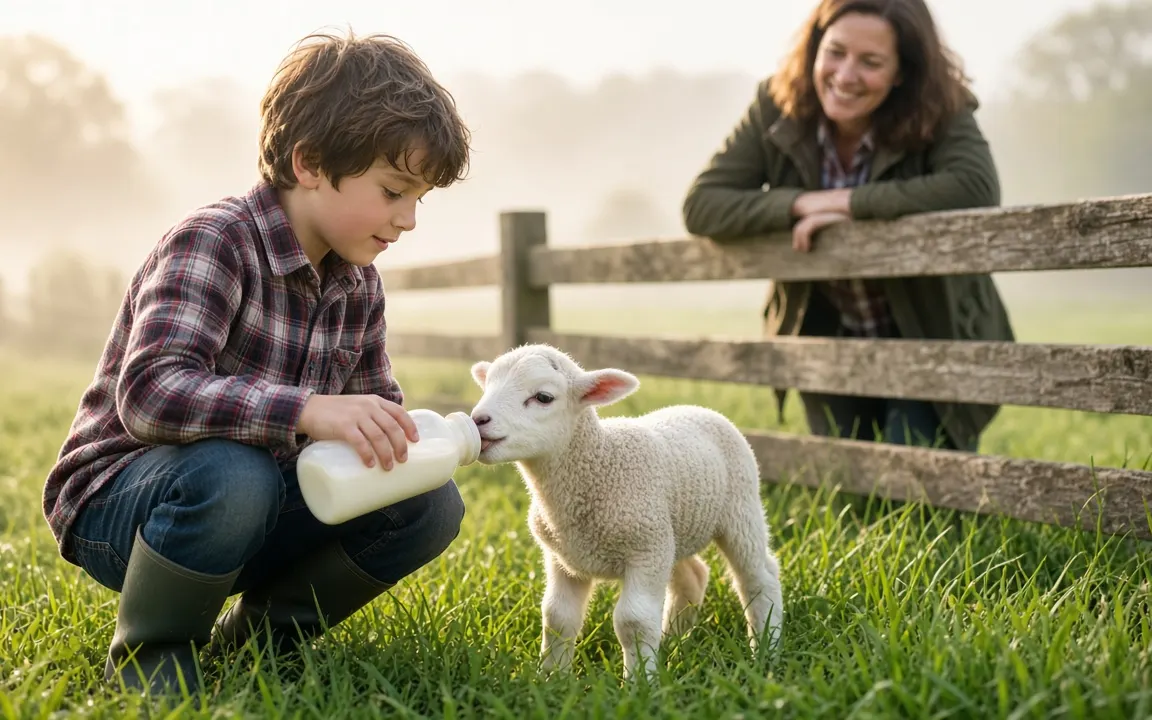
A child who bottle-fed a lamb at 2 a.m. or walked a wether around a show ring has done real caregiving. Their grief tends to track that work, not the animal's price or label. So treat it the way you would the family dog, even if the paperwork calls the animal livestock.
This guide is the whole-family plan: what to expect by age, the practical decisions, and how kids can take part. If you want the actual words for the first conversation, our companion piece on talking with children about a farm animal's death has scripts for the hardest questions.
What they already understand
Do farm kids really take animal death in stride?
Often less than adults assume. Children on homesteads see chicks that don't make it, stillborn kids at kidding time and market animals loaded onto a trailer. That exposure teaches them death is real and permanent, which is useful. It doesn't make them immune to losing the one animal that came when they called its name.
Losses are common in young stock, which is worth knowing if your child raises babies. USDA figures show 19.4% of goat kids born in 2015 died[2], and predators caused 40.1% of lamb losses in 2019[3]. Neither number makes a particular death less sad, but they help an older child understand that a loss isn't proof they did something wrong.
- Be clear about which animals are pets. If some goats are for meat and one is family, say so out loud. Children cope far better with a clear line than with a vague one.
- Don't borrow the market-animal script. "That's what farm animals are for" may be true of the steer, but it lands badly when a child's pet hen has died.
- Expect questions about the freezer. A child who knows where bacon comes from may worry about what happens to their pig's body. Answer it head-on.
Age by age
What can children of each age handle?
| Age | What they usually understand | What helps on a farm |
|---|---|---|
| Under 5 | Death may seem temporary; they may ask when the goat is coming back | Short, concrete words. Let them pat the animal if calm. Keep feeding and bedtime routines steady. |
| 5 to 8 | Grasp that death is permanent; magical thinking about blame is common | Say plainly what caused it. Give one small job, such as choosing the flowers or holding the halter. |
| 9 to 12 | Want the facts and the biology; may ask about the body directly | Explain cremation or burial honestly. Let them help plan the memorial and write a note for the record book. |
| Teens | Adult understanding, sometimes with private grief or anger | Include them in the aftercare decision and cost. Respect it if they'd rather be alone in the barn for a while. |
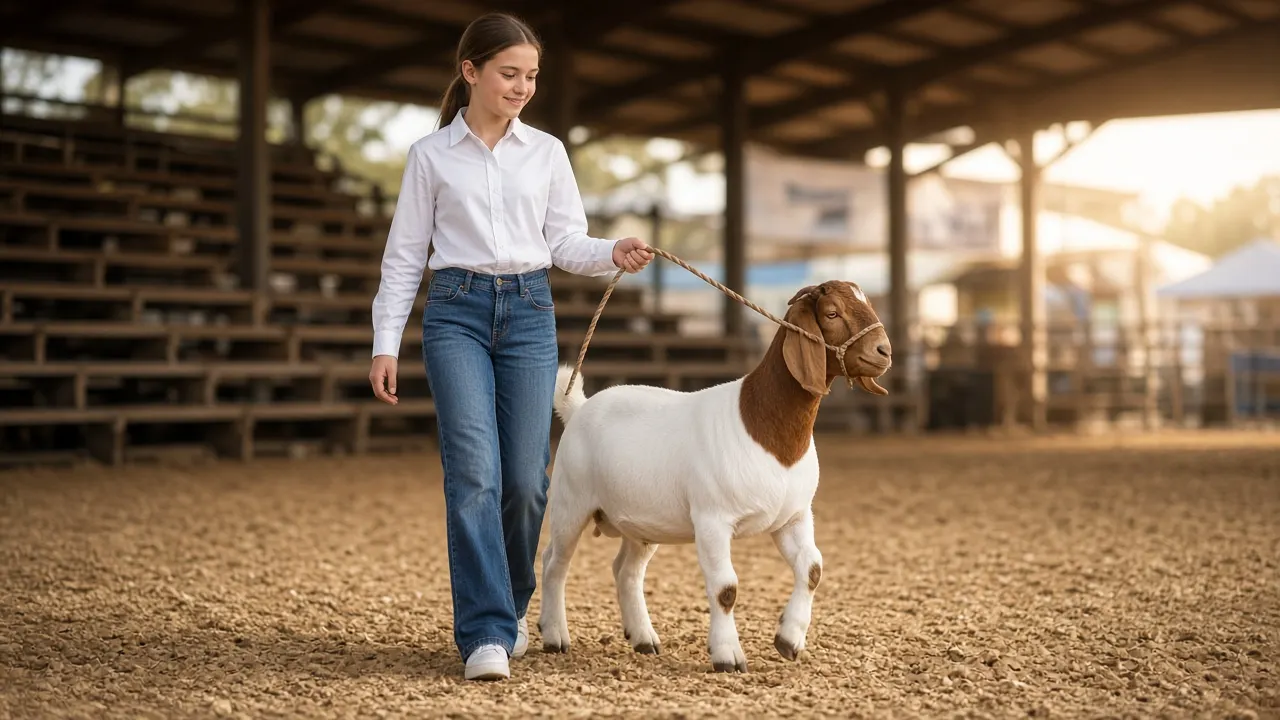
Young children often grieve in bursts, sad at the gate and then playing ten minutes later. That's normal. Older kids who showed an animal through 4-H or FFA may also feel they've lost a project, a goal and a friend at once, especially if a fair is coming up. Let them say so without being told the season doesn't matter.
The first hour
Should your child see the animal's body?
Offer it; don't insist. Most children who choose to see a calm, covered animal find it easier to believe what happened, and it spares them imagining something worse. Lay the animal on clean straw, close the eyes if you can, and cover it to the shoulders with a feed sack or old blanket. Tell your child what they'll see before they walk in: "Pepper is lying in the stall. She's still and she feels cool."
If the death was violent, such as a dog or fox attack, make it tidy first or offer only a hand on a covered flank. For a hen that died suddenly, keep children from handling the bird until you know the cause. Bird flu has affected 179 million birds[4] in the US since 2022, and a backyard flock with several sudden deaths should be reported to your state vet or the USDA sick-bird line at 1-866-536-7593.
Decide in advance whether kids will be there when the animal is collected. Watching a heavy goat or pig winched into a van can be upsetting. Many families say goodbye in the stall and then send the children to the house with a grandparent. Our transport and logistics article explains how collection usually works so you can picture it before you choose.
The next morning
Who does the chores when the empty stall is right there?
Chores don't stop, and for most kids that's a quiet help. Feeding the rest of the herd gives a sad morning some shape. The hard part is the gap: one less bucket, a pen that's too quiet, a hen missing from the roost count. Swap chores for a week if your child keeps freezing at the same gate, then offer the old job back.
Watch the surviving animals together. Goats, sheep, alpacas and donkeys are herd animals and may call, pace or stop eating when a companion goes. Children notice this and sometimes feel responsible for comforting them, which can be a healthy outlet. Just make sure an adult keeps an eye on the herd mate's appetite, because a donkey that stops eating can get seriously ill quickly and needs a vet.
- If your child blames themselves (a gate left open, a missed check), say what you know of the cause and correct the part that isn't true.
- If there was a real mistake, keep it small and fixable: "We'll put a second latch on the coop together this weekend."
- Keep any 4-H record book open. Writing the last entry is often something older kids want to do themselves.
How do you think of the animal you've lost, or are about to lose?
Tap an answer to vote and see how others answered. Anonymous.
Giving them a role
How can children take part in the aftercare and memorial?
Children cope better when they have something to do with their hands. The aftercare choice shapes what's possible: a private cremation returns your animal's own ashes, while communal cremation or fallen-stock collection doesn't. Our private versus communal comparison explains the difference, and the services page covers every route for goats, pigs, sheep, camelids and birds.
If ashes come home, expect a lot more than from a cat. Cremated remains weigh roughly 3-5% of body weight[5], so a 90 lb Nigerian Dwarf cross could leave three or four pounds. Check with the ashes weight estimator before promising a child a small box on their shelf.

Free tool
Ashes weight estimator
See roughly how much ash to expect back, by species and body weight.
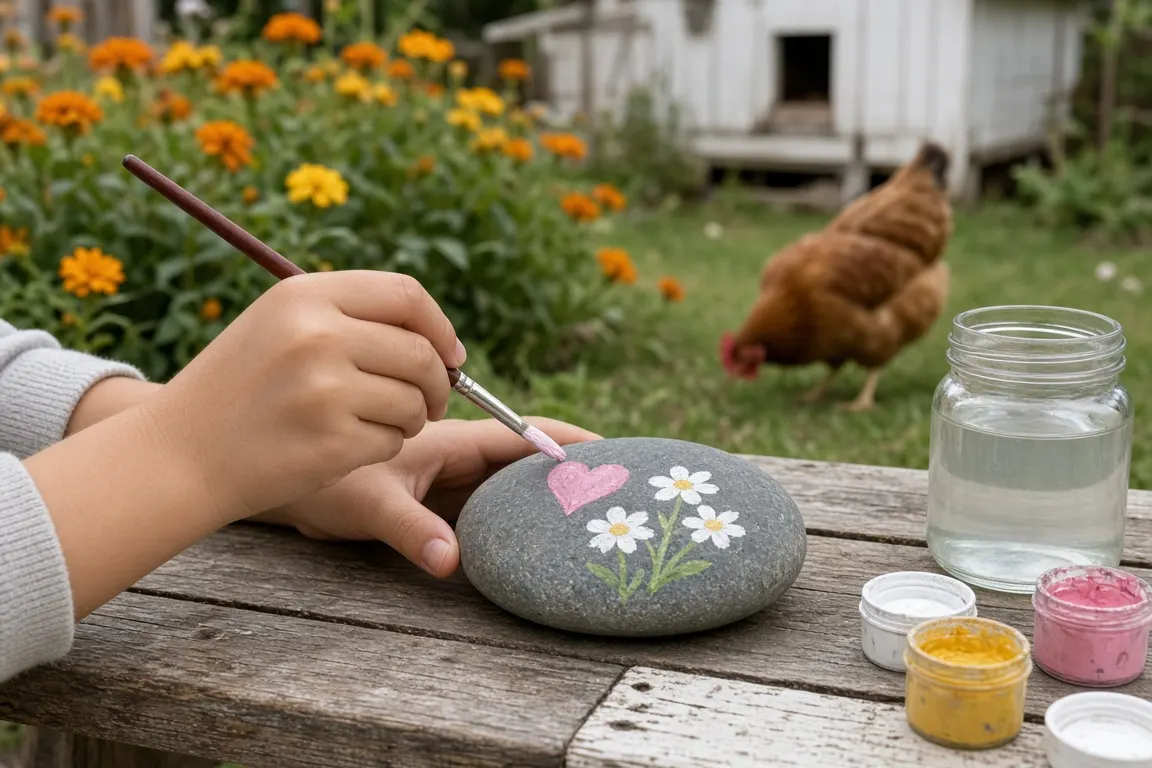
- Paint the name on a fence board or flat stone for a memorial corner by the paddock.
- Plant something the animal liked to eat, such as a mulberry for goats or sunflowers for hens.
- Frame a show photo with the ribbon, or keep the halter on a peg in the barn.
- Stuff a small pillow with a lock of washed fleece.
- Let younger kids draw the animal and tape the picture inside the feed room door.
Keep costs visible to older children so they understand the decision. The memorial budget planner lets you price a marker, urn or planting together, and there are more ideas in our guide to outdoor memorials for farm companions.
Keeping an eye out
When is a child's grief worth a closer look?
Adults are often caught off guard too. In the RSPCA's pet-loss survey, 66.9%[6] of respondents were surprised by how intense their grief was, and 99.3%[7] saw their animal as family, a friend or a companion. Kids pick up on how you're doing, so it's fine to let them see you sad and to say what helps you.
By our estimate, up to about 1 in 15 UK adults[8] have found a pet's death harder than any human loss. A child who takes the loss of a show goat very hard is in good company.
Talk to your child's teacher or doctor if sleep, eating or schoolwork are still disrupted after several weeks, if they refuse to go near the barn for a long time, or if the loss seems to have brought back an older grief such as a grandparent's death. Free pet-loss lines, such as the Tufts helpline[9], can also help parents think through what to say.
A child who fed her twice a day for three years has earned the right to be sad about a hen.
When you're ready to arrange aftercare, send us the details and we'll email options from providers who take farm species near you. You can also browse local rules and providers first. You can see how other families answered our polls on the results page.

Reader polls
What would you choose?
Vote anonymously and see how other readers answered. The results are live counts from people who visit this site, so they show real opinions, not a scientific sample.
How do you think of the animal you've lost, or are about to lose?
Tap an answer to vote and see how others answered. Anonymous.
What was the hardest part of losing your pet?
Tap an answer to vote and see how others answered. Anonymous.
What personal touch matters most on a memorial?
Tap an answer to vote and see how others answered. Anonymous.


Questions people ask
Should I tell my child their 4-H animal died, or wait until after the fair?
Tell them now. Children usually find out, and learning later that you kept it from them can damage trust more than the loss itself. If the fair is close, talk together about whether they want to show another animal, help a friend or sit this year out. Let them have a say in the plan.
Is it okay for my child to be present when the vet euthanizes a goat or pig?
It can be, for older children who ask and who've been told exactly what they'll see. Many families have children say goodbye first and step away for the injection, then come back once the animal is still. Ask your vet to explain each step beforehand. Younger children are usually better off saying goodbye beforehand and hearing about it afterward.
What do I tell my child if we can't afford private cremation?
Be honest: the family chose a respectful option that doesn't return ashes, and here's how we'll remember her. Before collection, keep something physical, such as fleece, feathers or an ear tag. Communal cremation or collection doesn't make the animal less loved, and children usually care more about the goodbye ritual than the method.
My child wants another lamb right away. Is that a bad idea?
Not necessarily. On a farm, the herd may need a companion anyway, and caring for a new animal can help. Just make sure your child knows the new lamb isn't a replacement and can have its own name and personality. If they seem to be rushing to avoid feeling sad, wait a few weeks and revisit it together.
How do I explain that we eat some animals but not the pet goat?
Keep it plain: some animals on our farm are raised for food and some are family, and we decided which is which when they arrived. The pet goat will not be eaten. She'll be cremated or buried, and we'll remember her. Kids accept firm, consistent lines far more easily than exceptions made up on the day.
Can we bury our child's hen in the garden?
In much of the US, a small bird can be buried on private land, but rules vary by state and county, so check locally. Dig deep enough that dogs and foxes can't reach it. If the hen died suddenly, contact your vet or state vet about bird flu first. In England, poultry counts as fallen stock and on-farm burial isn't allowed.
Keep reading

What to say, word for word
Scripts for the hardest questions children ask.

Making a memorial corner
A quiet spot on the land the whole family can shape.

Aftercare options for farm species
Cremation, collection and burial routes compared.

Ask us for options
Tell us the animal and location; we reply by email.
Sources and our estimates
- [1] 93.4% of parents in the RSPCA survey wanted better guidance on helping children through pet loss. RSPCA — Pet Loss Survey Results, 2026.
- [2] About 500,000 U.S. adult goats and kids died in 2015, equal to 9.8% of the adult goat inventory and 19.4% of kids born; losses were valued at $69.6 million. USDA APHIS NAHMS - Goat and Kid Predator and Nonpredator Death Loss in the United States, 2015, 2015.
- [3] In 2019, 6.8% of U.S. sheep inventory and 12.0% of the lamb crop were lost to death; predators caused 32.6% of sheep losses and 40.1% of lamb losses. USDA APHIS NAHMS - Death Loss Trends in the U.S. Sheep Industry: 1994-2019 (Sheep Death Loss 2020, published June 2022), 2019.
- [4] As of September 30, 2025, the U.S. highly pathogenic avian influenza (HPAI) outbreak that began in February 2022 had hit all 50 states and Puerto Rico, infecting 1,741 premises and affecting over 179 million birds. USDA APHIS CEAH - Status and Epidemiologic Analyses of HPAI-affected Poultry Flocks, September 30, 2025 Interim Report, 2025.
- [5] Embrace notes cremated remains typically weigh about 3-5% of the pet's original body weight. Embrace Pet Insurance - Bury or Cremate Your Dog? Costs, Pros & Cons, 2025.
- [6] 66.9% of respondents were surprised by how intense their grief was after losing a pet. RSPCA — Pet Loss Survey Results, 2026.
- [7] In the RSPCA's pet-loss survey (over 4,000 respondents), 99.3% saw their pet as family, a friend or a companion. RSPCA — Pet Loss Survey Results, 2026.
- [8] About 7 in every 100 UK adults may have had a pet's death hit harder than any human loss. Our estimate: 32.6% have lost a pet x 21% chose pet as most distressing. How we calculate.
- [9] Tufts University's Pet Loss Support Helpline (508-839-7966) is free and volunteer-staffed, 6–9 pm ET Monday to Thursday, with 24-hour voicemail. Tufts Cummings School of Veterinary Medicine, 2026.
Get aftercare options your family can agree on
Tell us what you need and where you are. We'll reply by email with clear options and prices so you can decide in your own time.