Planning on-farm burial or composting for a goat, sheep or hens
Composting a large animal takes 10-12 cu yd per 1,000 lb[1] in cover material, so even one ewe needs a real pile. This planner sizes it, or a burial pit, for your animals and flags the rules to check first.
- Cover material and trench estimates
- Costs compared with rendering and cremation
- Key legal reminders by method
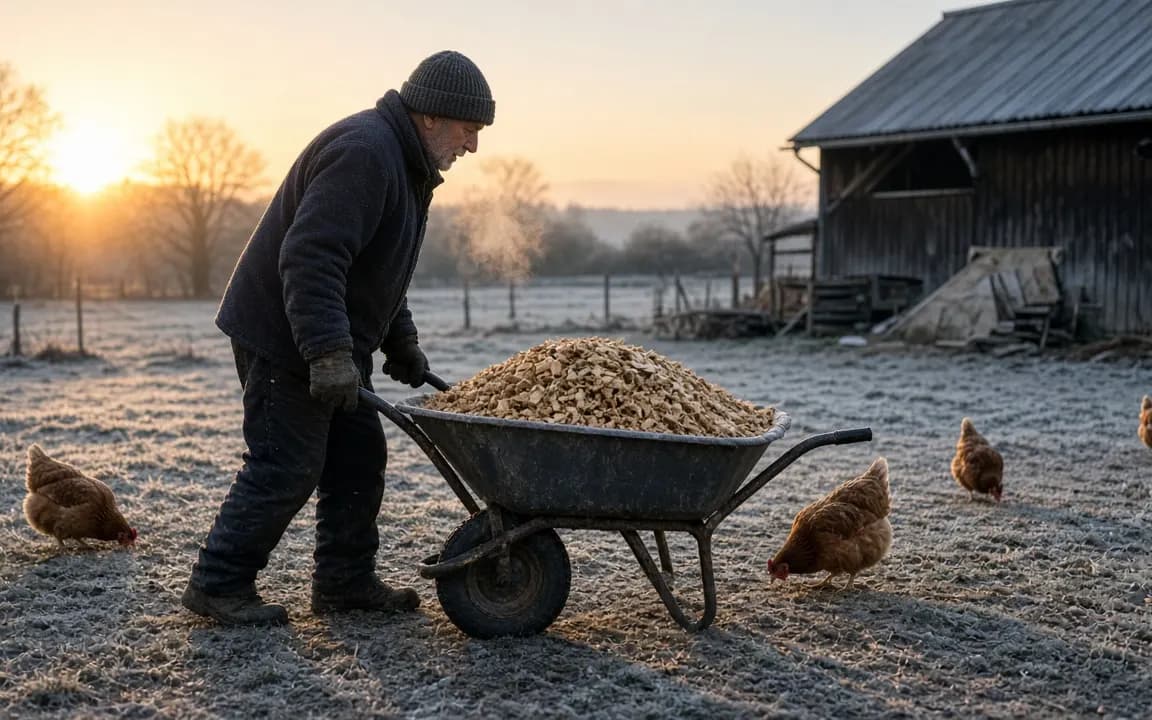
Livestock mortality planner
Estimate capacity, time and cost for one animal or a whole group. Always check your state or national rules before you act.
Carbon cover material needed
1.5–1.8 cu yd
Total weight about 150 lb
Estimated cost (US)
$20–$50
materials, equipment, fuel and labor, scaled from a 1,200 lb horse
- Use wood chips, sawdust or similar: about 10–12 cubic yards per 1,000 lb of carcass.
- The pile should reach 135–140°F within 15 days and hold that for 3–12 weeks.
- Smaller carcasses compost faster than mature cattle, which need about 240 days in the second phase.
- Site piles at least 300 ft from bodies of water.
Key rules to check
- Many US states require burial or disposal within 24–72 hours of death.
- Animals euthanized with drugs must be buried deep, incinerated or otherwise kept from scavenging wildlife.
- California prohibits composting unprocessed mammalian tissue such as cattle, goats and sheep.
- England bans burying or burning fallen farm stock; use an approved collector such as the National Fallen Stock Company.
US extension and industry figures, some from before 2020. Prices in other currencies vary.
Source: USDA APHIS / Center for Food Security and Public Health (Iowa State) - Disposal: Composting, Rendering & Burial handout, based on NAHEMS Disposal Guidelines (2012); Cornell Waste Management Institute & Penn State - Horse Mortality: Carcass Disposal Alternatives (2012); UC Cooperative Extension (Schohr, Lile, Snell) - Livestock Carcass Management, UC ANR 2021; GOV.UK (Defra/APHA) - Fallen stock guidance
Next step: Get a quote for collection or cremation →
Who this is for
A planner sized for smallholdings, not feedlots
This tool was built for farms of every size, but on this site we use it for the situations smallholders face: one old goat, a ewe that didn't make it through lambing, a few hens lost over a winter. Where on-farm burial or composting is legal, it tells you how much space, material and time you'll need, and what it might cost against rendering or cremation.
If you manage a commercial herd or flock, the same math applies at scale, but you'll also need a mortality plan agreed with your vet and regulator, which is beyond what we cover. For named pets, our services page sets out every route including cremation with ashes returned.
Using the planner
Four inputs, one practical plan
- Animal, which fills in a typical weight: 150 lb for a sheep or goat, 250 lb for a pig or calf. There's no poultry option, so for hens pick "Other large animal" and type the birds' weight; the math depends only on weight.
- Number of animals, from one upward.
- Average weight in pounds or kilograms.
- Method: composting, burial, rendering or cremation.

Free tool
Livestock mortality planner
Plan disposal capacity and costs for farm losses, from one animal to a herd.
Depending on the method, the result shows the cover material you'd need, a trench length, a pickup count or a minimum burn time, alongside a US cost range and a short list of rules to check.
How composting is calculated
Composting: material, heat and time
Carcass composting buries the animal in a thick bed of carbon material, such as wood chips, sawdust or old bedding, so that microbes heat the pile and break down soft tissue. The planner uses the USDA's carcass disposal guidance of 10-12 cu yd per 1,000 lb[1] of animal, with a base layer underneath and a cap on top.
A working pile should reach 135-140 F[2] within about two weeks and stay hot for several more. Poultry are quick: the second phase takes around ten days for chickens, compared with about 240 days[3] for a mature cow or horse. Goats and sheep sit in between.
For scale, by our calculation a 1,400 lb dairy cow needs roughly 14 to 16.8 cubic yards of cover[4]. A 150 lb ewe needs about a tenth of that, around a pickup load of wood chips.
85%[5]
How burial is calculated
Burial: depth, cover and distance from water
For burial, the planner estimates a trench length from total weight, assuming a trench about 6 feet wide and 8 feet deep with 3 feet of soil on top, and lists setbacks such as Pennsylvania's 100 feet from wells. For one goat it will simply show the 4-foot minimum. Local rules go further than the planner can: Michigan, for example, requires burial within 24 hours, at least 2 feet deep and 200 feet from any well. Guidance for larger burials suggests trenches 4-8 ft deep[6], with compost sites kept well away from water. Penn State Extension's mortality disposal guide lists that state's full burial conditions.
Two warnings matter most for smallholders. First, in England, pet pigs, sheep and goats can't be buried or composted on the holding at all. Second, if a vet euthanized your animal, the drugs remain in the body and can kill scavengers, so a shallow grave is not safe. Deep burial or cremation is the responsible choice.
Worked example
Three hens and an old ewe on a Vermont homestead
Over one winter, a Vermont homestead loses three 6 lb hens and, in spring, a 150 lb Border Leicester ewe. The birds died of old age and cold, with no sign of disease; the ewe was put down by the vet.
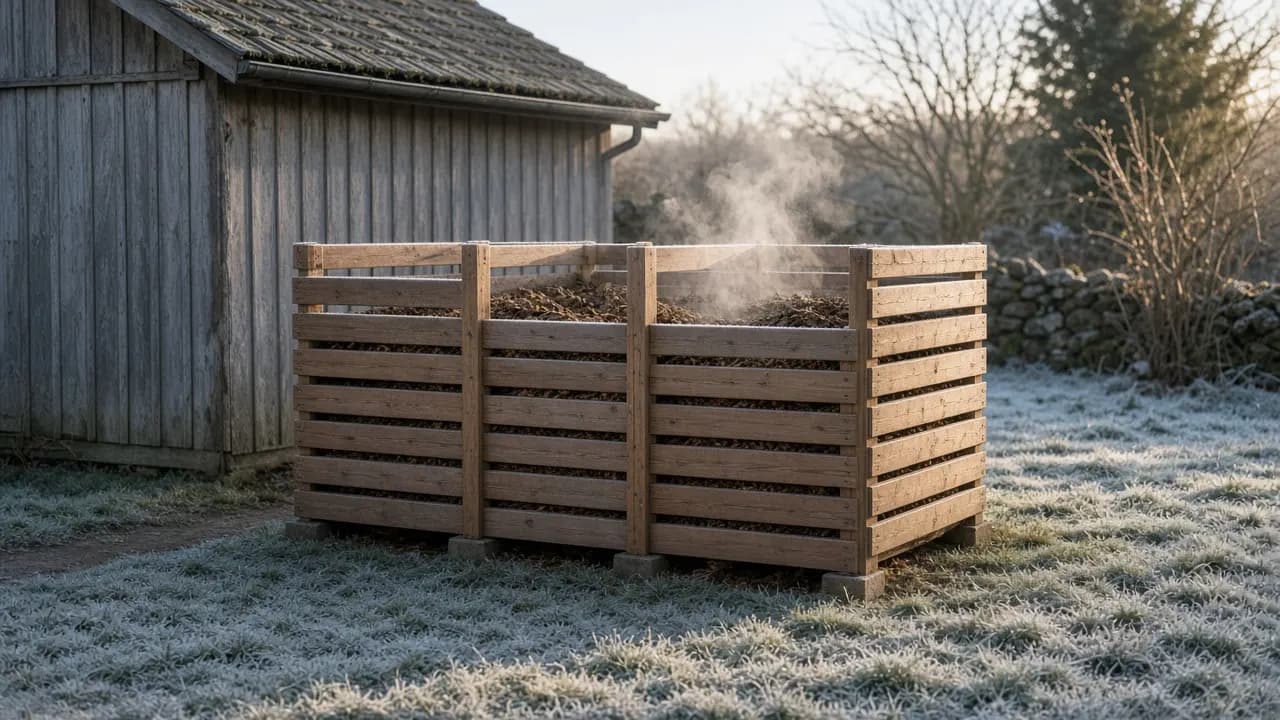
- The hens, 18 lb in total, entered as three "Other large animal" at 6 lb, need only about 0.18 to 0.22 cubic yards of cover: a few wheelbarrows of wood chips in a small bin. Well-managed, they'll be broken down within weeks once the pile heats up.
- The ewe, at 150 lb, would need roughly 1.5 to 1.8 cubic yards of cover material, with a composting cost range of about $20 to $50. That's a pickup-bed load of chips and a spot well away from the well. Switch to cremation and the planner shows $90 to $150.
- But she was euthanized, so composting isn't the safe choice; deep burial or cremation protects wildlife and dogs.
In this case the family might compost the hens and choose cremation for the ewe, perhaps scattering her ashes in the pasture. For side-by-side prices, the horse aftercare cost comparison scales to her weight, and the aftercare options comparison ranks the routes by what matters to them.
Before today, did you know the burial rules for farm species where you live?
Tap an answer to vote and see how others answered. Anonymous.
Limits and next steps
What the planner can't check for you
The planner gives typical figures, not a permit. It can't see your water table, soil type, bedrock depth or local ordinances, and it doesn't know whether a disease investigation is needed. Pennsylvania, for instance, recognizes 4 legal methods[7] for dead stock: composting, rendering, incineration and burial, with open burning ruled out. Your state or country may differ.
Check the rules on our local pages first. For the environmental side, our page on evaluating environmental claims compares composting, burial and cremation fairly. If moving the animal is the hard part, see transport and logistics. And if on-farm options don't suit, send us your animal's details and we'll find cremation or collection near you. And to see how other keepers answered the burial-rules question, check the poll results.

Reader polls
What would you choose?
Vote anonymously and see how other readers answered. The results are live counts from people who visit this site, so they show real opinions, not a scientific sample.
Before today, did you know the burial rules for farm species where you live?
Tap an answer to vote and see how others answered. Anonymous.
What was (or would be) hardest about the practical side?
Tap an answer to vote and see how others answered. Anonymous.
If you had to decide today, which aftercare would you choose for your pet?
Tap an answer to vote and see how others answered. Anonymous.

Free tools to help you plan
Livestock mortality planner
Plan disposal capacity and costs for farm losses, from one animal to a herd.
Horse aftercare cost comparison
Compare equine cremation, burial, rendering and composting side by side.

Aftercare options compared
Compare private, communal and water cremation with burial on cost, timing and what comes home.
Questions people ask
Can I compost a dead goat or sheep?
In many US states, yes, following extension guidance on cover material, temperature and siting. California bans composting unprocessed sheep and goats, and England doesn't allow on-farm composting of fallen stock. If the animal was euthanized with drugs, composting may not be safe for wildlife, so check with your vet.
How deep should I bury a goat or pig?
Rules vary, but a common requirement is at least 2 to 3 feet of soil over the body, with the bottom of the pit well above the water table and away from wells and streams. Deeper is safer, especially for euthanized animals. Check your state or local rules before digging.
What's the easiest option for a single dead hen?
If there's no sign of disease, burial in a garden where allowed, a small compost bin, or communal cremation are all simple. If the bird died suddenly, or several died together, call your vet or animal health office first because of bird flu reporting rules.
How long does a composted sheep take to break down?
Soft tissue usually breaks down within a few months in a pile that heats properly, with bones taking longer. Plan for the pile to stay in place for most of a year for a sheep- or goat-sized animal, turning it once after the first heating phase if guidance in your area recommends that.


Sources and our estimates
- [1] Bovine composting may require 10-12 cubic yards of cover material per 1,000 lb of carcass. USDA APHIS / Center for Food Security and Public Health (Iowa State) - Disposal: Composting, Rendering & Burial handout, based on NAHEMS Disposal Guidelines (2012), 2012.
- [2] A carcass compost pile should reach 135-140 F within 15 days and be held at temperature for 3-12 weeks. USDA APHIS / Center for Food Security and Public Health (Iowa State) - Disposal: Composting, Rendering & Burial handout, based on NAHEMS Disposal Guidelines (2012), 2012.
- [3] The second composting phase takes about 10 days for chickens but approximately 240 days for mature cows and horses. USDA APHIS / Center for Food Security and Public Health (Iowa State) - Disposal: Composting, Rendering & Burial handout, based on NAHEMS Disposal Guidelines (2012), 2012.
- [4] Composting a 1,400 lb dairy cow would need roughly 14-16.8 cubic yards of cover material. Our estimate: 1.4 x (10 to 12 cu yd per 1,000 lb). How we calculate.
- [5] Composting was used for 85% of poultry carcasses in the 2014-2015 U.S. HPAI outbreak; EPA lists composting and permitted landfills as the preferred disposal methods. U.S. EPA - Carcass Management During Avian Influenza Outbreaks, 2015.
- [6] Mass-burial trenches for large animals are typically 4-8 feet deep and about 6 feet wide, and compost sites should be at least 300 feet from bodies of water. USDA APHIS / Center for Food Security and Public Health (Iowa State) - Disposal: Composting, Rendering & Burial handout, based on NAHEMS Disposal Guidelines (2012), 2012.
- [7] Pennsylvania Extension notes that open-air burning is not a legal way to dispose of dead stock; legal options are composting, rendering, incineration and burial. Penn State Extension - Livestock and Poultry Mortality Disposal in Pennsylvania (J. Craig Williams, updated Oct 2025), 2025.
Prefer cremation or collection instead?
Tell us what you need and where you are. We'll reply by email with clear options and prices so you can decide in your own time.