What to ask a cremation provider before they take your farm animal
Fewer than half of pet cremation buyers, 47%[1] in one UK study, remembered being told about the full range of options. For a goat, pig or alpaca, a few direct questions on the first call prevent most of the surprises.
By the Farm Animal Cremation Services editorial team · Updated September 24, 2026 · 5 min read · Sources
- Questions grouped by stage, from first call to return
- What a good answer sounds like
- Farm-specific checks most lists miss
The short answer
What are the most important questions to ask?
Start with three: Do you accept this species at this weight? Is the cremation private, in writing? And what is the total, including collection? If a provider can answer all three clearly on the first call, the rest usually follows. If they hesitate on any of them, keep looking before you agree.
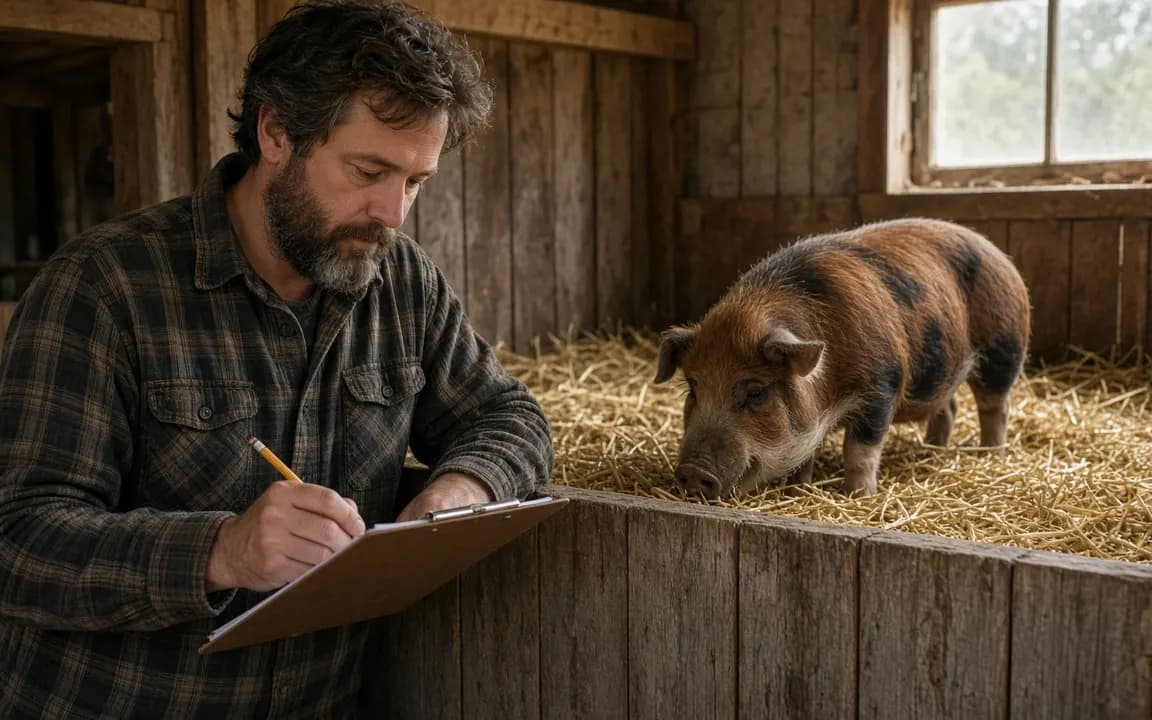
Farm animals need a few questions a dog owner never has to ask, about chamber size, how a heavy body gets from a field to a vehicle, and what happens to fleece, feathers and ear tags. The lists below follow the order you'll meet them: the first call, the collection, the cremation and the return of the ashes.
Which of your animals are you thinking about today?
Tap an answer to vote and see how others answered. Anonymous.
Stage one
What should you ask on the very first call?
- "Do you take goats (or pigs, sheep, alpacas, poultry)?" Good answer: a plain yes or no, and if no, a suggestion of who does. Some pet crematories take goats but not pigs, or cap weight around 150 lb.
- "What's the heaviest animal your chamber can take?" Good answer: a number. Commercial pet units vary widely; one common design is rated for loads up to 1,500 lb load[2], while smaller ones are built around dogs.
- "Is your cremation private, partitioned or communal?" Good answer: they use those words and explain the difference without being asked twice.
- "What would the total be, all in?" Good answer: a figure, followed by an offer to send it in writing.
- "How soon could you collect, and what do I do until then?" Good answer: a realistic window and simple advice on keeping the body cool and covered.
If you haven't decided whether you want ashes back, our article on private vs communal cremation for farm animals walks through the choice. It's easier to make before the first call than during it.
Stage two
What should you ask about collection from the farm?
This is where farm aftercare differs most from a dog or cat. A crew arriving with a stretcher built for a Labrador can't lift a 250 lb pig out of a sloping pen. Describe the scene honestly: where the animal is, how far from a drivable surface, and whether the ground is soft.
- "How many people will come, and what equipment do you bring?" Good answer: they ask about the weight and access first, then name a winch, sled, ramp or tail-lift.
- "Can your vehicle reach a field, or do I need to move the animal to the yard?" Good answer: an honest limit. Many vans can't cross wet pasture.
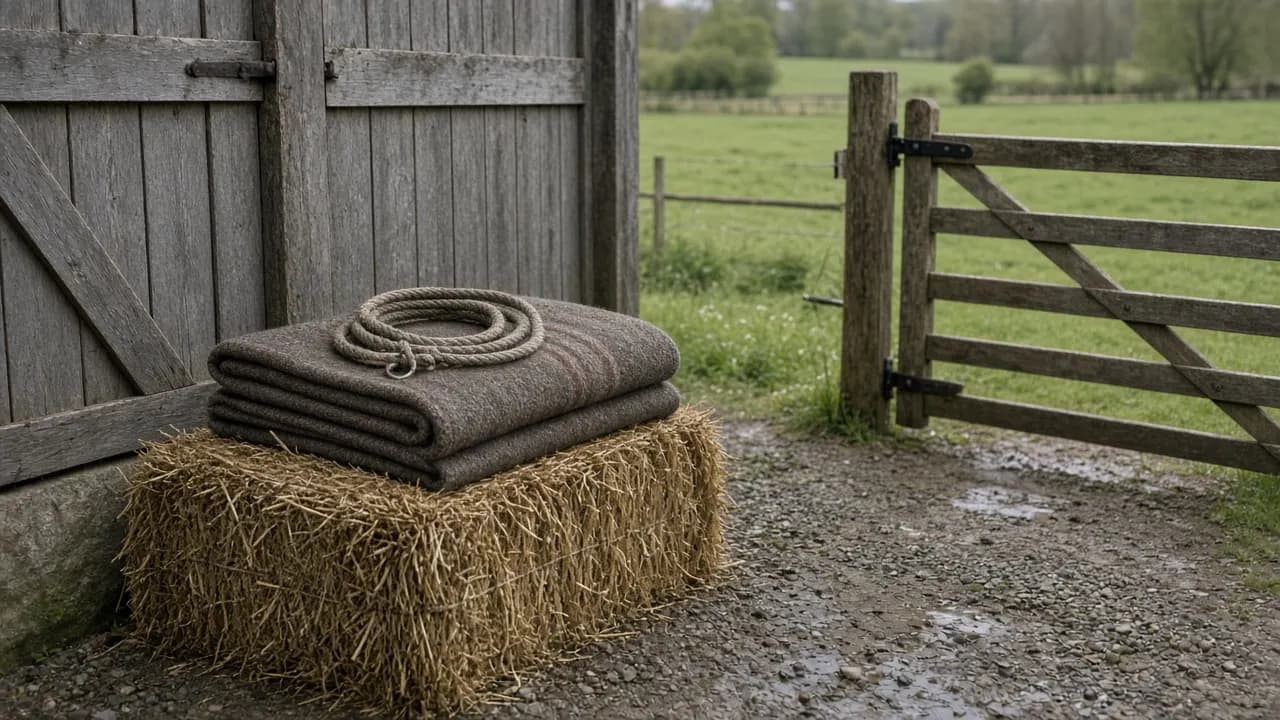
- "Can I be there, and can I send a blanket or halter with them?" Good answer: yes, with a note of anything that must be removed before cremation.
- "How will my animal be covered in the vehicle?" Good answer: wrapped or covered, never loose in an open truck bed.
If you'd rather move the animal yourself or meet the crew halfway, read transport and logistics when a farm animal passes for safe lifting and loading.
Stage three
What should you ask about the cremation itself?
- "How is my animal identified from my gate to the urn?" Good answer: a numbered tag or disc that travels with the body into the chamber and comes back with the ashes, plus a record you can see.
- "Will anything else be in the chamber at the same time?" Good answer for private cremation: no. If the honest answer is "other pets, separated", that's partitioned, and you should know.
- "How long does a cremation this size take?" Good answer: a rough time. Large units average about 250 lb/hour[3], but heating the chamber, cremation and cooling together mean a 200 lb animal still takes several hours.
- "What happens to ear tags, halters and metal?" Good answer: they're removed first or recovered afterward, and you can ask for tags back.
- "Can I watch the cremation begin?" Good answer: yes or no, and the extra cost and scheduling if yes.
Ask about time as well as price. By our calculation, at a large-unit rate of 250 lb an hour, the burn phase alone for a 1,100 lb horse takes at least 4.4 hours[4]; a 200 lb pig takes less, but cooling and processing add hours at any size. If you want to be present, expect a witness surcharge; our estimate of the median is about $125[5].
For a step-by-step picture of what happens behind the door, see what happens during farm animal cremation.
Stage four
What should you ask about getting the ashes back?
Ash volume surprises many farm keepers. Remains weigh roughly 3-5% of body weight[6], so a 180 lb ram returns several pounds, far more than a small keepsake urn holds. Some large-animal crematories return a set portion unless you ask for everything.
- "Will you return all of the ashes, or a portion?" Good answer: a clear statement, written on the paperwork.
- "What container do they come in, and can I upgrade later?" Good answer: a description of the standard box or tube, and no pressure to choose an urn today.
- "When will they be ready, and how do I get them?" Good answer: a date range and a choice of collection or delivery. Many US providers quote 5-10 days[7] for private cremation.
- "Will I receive a certificate?" Good answer: yes, naming your animal, the date and the type of cremation.
The urn size calculator turns your animal's weight into an urn volume, so you know what to ask for before the ashes come home.

Free tool
Urn size calculator
Find the urn volume you need from your pet's weight, plus keepsake and sharing options.
Farm-specific
Which questions do farm keepers most often forget?
- Fleece, wool and feathers. Ask whether they can take a clipping, or whether you should do it before collection. It can't be done afterward.
- Euthanasia. Tell them if a vet put your animal to sleep. The drugs are a hazard to scavengers, so cremation is a good route, and the provider may have handling rules.
- Disease testing. If the death was sudden, ask whether they can wait for a necropsy or collect from a diagnostic lab.
- Reporting. In the UK, when fallen stock needs BSE testing, the collector must be contacted within 24 hours of death[8]. A provider working with farm species should know the local rules.
Most people take the first name they're given: 89%[9] of UK cremation buyers never compared providers at all. With farm species, asking two providers the same questions is often the only way to find one that fits. Our guide to comparing written quotes shows how to line up the answers. Those figures come from the Competition and Markets Authority's investigation. If your animal was euthanized, the Cornell Waste Management Institute's fact sheet explains why providers ask: the drugs stay in the body and put scavenging wildlife at risk.
Which keepsake would mean the most to you?
Tap an answer to vote and see how others answered. Anonymous.
Trust your instincts
What if the answers don't feel right?
A good provider welcomes questions, even ones asked through tears at 7 in the morning. Vague answers about identification, a refusal to write down a price or a sudden change of subject when you ask about private cremation are all reasons to make one more call. You're not being difficult; you're doing the one job left for an animal who trusted you.
The right crematory will answer the same question twice without sighing.
If you'd rather hand the calls to someone else, send us your animal's details. We'll reply by email with options from providers who take farm species in your area. You can also browse services for farm animals to see what each route involves. Browse our local pages to see who works near you, or see which questions other keepers found hardest in our poll results.

Reader polls
What would you choose?
Vote anonymously and see how other readers answered. The results are live counts from people who visit this site, so they show real opinions, not a scientific sample.
Which of your animals are you thinking about today?
Tap an answer to vote and see how others answered. Anonymous.
Did you (or would you) compare more than one provider?
Tap an answer to vote and see how others answered. Anonymous.
If you had to decide today, which aftercare would you choose for your pet?
Tap an answer to vote and see how others answered. Anonymous.


Questions people ask
How do I know a crematory really takes farm animals?
Ask directly, naming the species and a weight. A provider that genuinely handles goats, sheep or pigs will answer quickly and usually ask how you'll get the animal to them. If they say "probably" or need to check whether the animal fits, ask for the maximum weight their chamber takes before you agree.
Is it rude to ask a crematory how they identify animals?
Not at all. It's one of the most common questions providers hear, and a good one will explain their tag or disc system without hesitation. Some will let you see the tag that travels with your animal or photograph it for you. Clear answers here are a strong sign of a careful business.
Should I ask for everything in writing?
Yes. A short email or text confirming the type of cremation, the price and what's included protects both of you. It doesn't need to be formal. Grief makes phone conversations hard to remember, and having the details written down means no one has to rely on memory later.
What should I ask if my animal was euthanized?
Tell the provider it was euthanized and ask whether that changes anything about handling or timing. Euthanasia drugs remain in the body and can harm scavenging wildlife, which is one reason cremation is a sensible choice. Some providers ask for the vet's name or a note of the date.
Can I ask a crematory to take a lock of fleece for me?
You can ask, and some will, but it's safer to take it yourself before collection. Cut a lock close to the skin from a clean area, tie it with thread and keep it in a paper envelope. Once cremation has happened, there's no way to recover fleece, wool or feathers.
How many providers should I call?
Two is usually enough to know whether a quote is fair and whether the answers are clear. For large animals like llamas, donkeys or big pigs, where fewer providers have the capacity, three calls can be worth it. If time is short, focus on species, weight, private cremation and the total.


Sources and our estimates
- [1] Fewer than half (47%) of UK cremation buyers recalled being told about a range of options, including communal cremation or home burial. UK Competition and Markets Authority - Veterinary services for household pets, Provisional decision report Part A (Oct 2025), 2025.
- [2] An animal incinerator sized for agricultural and animal-control use holds up to 1,500 lb per load with a maximum burn rate of 250 lb per hour (manufacturer specification). B&L Cremation Systems (manufacturer) - BLI-1500 Animal Incinerator specifications.
- [3] A commercial pet crematory rated for 1,000 lb loads cremates at an average of about 250 lb per hour (manufacturer specification). B&L Cremation Systems (manufacturer) - BLP-1000 Pet Crematory specifications.
- [4] At an average rate of 250 lb per hour, the burn phase for a 1,100 lb horse would take at least about 4.4 hours, not counting preheating and cool-down. Our estimate: 1,100 lb / 250 lb per hour. How we calculate.
- [5] Posted surcharges to witness or view a pet cremation range from $25 to $350, with a median of about $125 across four data points. Our estimate: median of [$25 guide low, $100 guide high, $150 NC provider, $350 VA provider]. How we calculate.
- [6] Embrace notes cremated remains typically weigh about 3-5% of the pet's original body weight. Embrace Pet Insurance - Bury or Cremate Your Dog? Costs, Pros & Cons, 2025.
- [7] A US aftercare guide says many families receive private cremation ashes within about one to two weeks, with 5-10 days commonly quoted. Funeral.com - Pet Cremation Timelines: How Long Until Ashes Are Returned, 2026.
- [8] In the UK, when fallen stock needs BSE testing, the collector must be contacted within 24 hours of death and the animal delivered to an approved sampling site within 72 hours. GOV.UK (Defra/APHA) - Fallen stock guidance, 2024.
- [9] 89% of UK owners who bought a pet cremation did not compare different providers; 9% did. UK Competition and Markets Authority - Veterinary services for household pets, Provisional decision report Part A (Oct 2025), 2025.
Let us ask the questions for you
Tell us what you need and where you are. We'll reply by email with clear options and prices so you can decide in your own time.