Farm animal cremation in College Station
Farm species give you less time than a dog or cat, and fewer providers take them. Start here for the first few hours, the local rules and honest prices, then ask us for options by email.
- Honest prices by body weight
- Farm collection, winch and trailer tips
- Fallen-stock and communal options too

College Station, Texas
What arranging farm animal cremation in College Station is like
Because Texas A&M has deep roots in agriculture and animal science, the area has an unusually dense network of livestock owners, 4-H and FFA families, and people who know large-animal handling. That community is often the quickest way to learn who is currently collecting fallen stock in Brazos County. The county extension office is another sensible first call if you are unsure whether cremation, rendering or removal suits your situation.
The Brazos Valley around College Station is working country: cattle on improved pasture, hay meadows, and horse properties along the roads toward Wellborn, Millican and Navasota. When a horse, cow or goat dies on acreage here, the first job is getting a truck with a winch onto the property. Have the gate width, the ground conditions after rain and a rough weight ready, because those details decide which hauler can come.
College Station sits in the middle ground for farm animal aftercare. There's usually at least one pet crematory in or near town, and often a mixed-practice vet who treats goats, sheep and pigs as well as dogs. Whether either can take your animal depends almost entirely on its weight. A pygmy goat or a few hens are easy; a full-size dairy goat, an alpaca or a mature pet pig may need a larger chamber, sometimes around College Station or further out.
About 127,472 people live in College Station, which makes it the 30th-largest of the 325 Texas communities we cover.
For a second opinion on price, Bryan (4 miles), Navasota (22 miles) and Brenham (32 miles) are close enough that their providers cover College Station routinely. Two written quotes tell you more than any price list.
55.7%[1]
The NFDA projected Texas's cremation rate at 55.7% for 2024.
$600-$1,000[2]
Cremating a 1,000-pound horse was reported to cost about $600-$1,000, depending on location and the price of propane.
3-5% of body weight[3]
Embrace notes cremated remains typically weigh about 3-5% of the pet's original body weight.
Where these figures come from: Embrace Pet Insurance and Extension Horses (eXtension national Cooperative Extension).

Burial, cremation and farm tradition in Texas
Burial and cremation sit side by side in Texas, where cremation is chosen for around 55.7%[1] of people, often within one family. An older farmer may bury stock while a younger keeper wants a named goat cremated. Neither has to win. Some families cremate and then bury the ashes on the land, which honors both habits at once.
The Texas figure comes from NFDA 2024 Cremation & Burial Report state projections (via Occasional Sage) (2024). It describes people, not pets, so read it as a sign of local attitudes rather than a pet statistic.
Heat, cold and timing in College Station
In the hottest months (May, June, July, August and September), don't plan on waiting until tomorrow. A 150 lb pig or goat holds heat long after death, and flies arrive fast. If collection will be delayed, lay bags of ice or frozen water bottles along the belly and flank under a light cover, never under a sealed plastic sheet, which traps heat. Hosing the body down doesn't help for long; shade does.
College Station's long warm season (May, June, July, August and September) is also fly season, and flies find a body within minutes. An old cotton sheet or a few feed sacks draped over the animal keep them off without trapping heat. Check the body every hour or two if pickup is delayed, and keep the other animals from lying beside it in the sun.
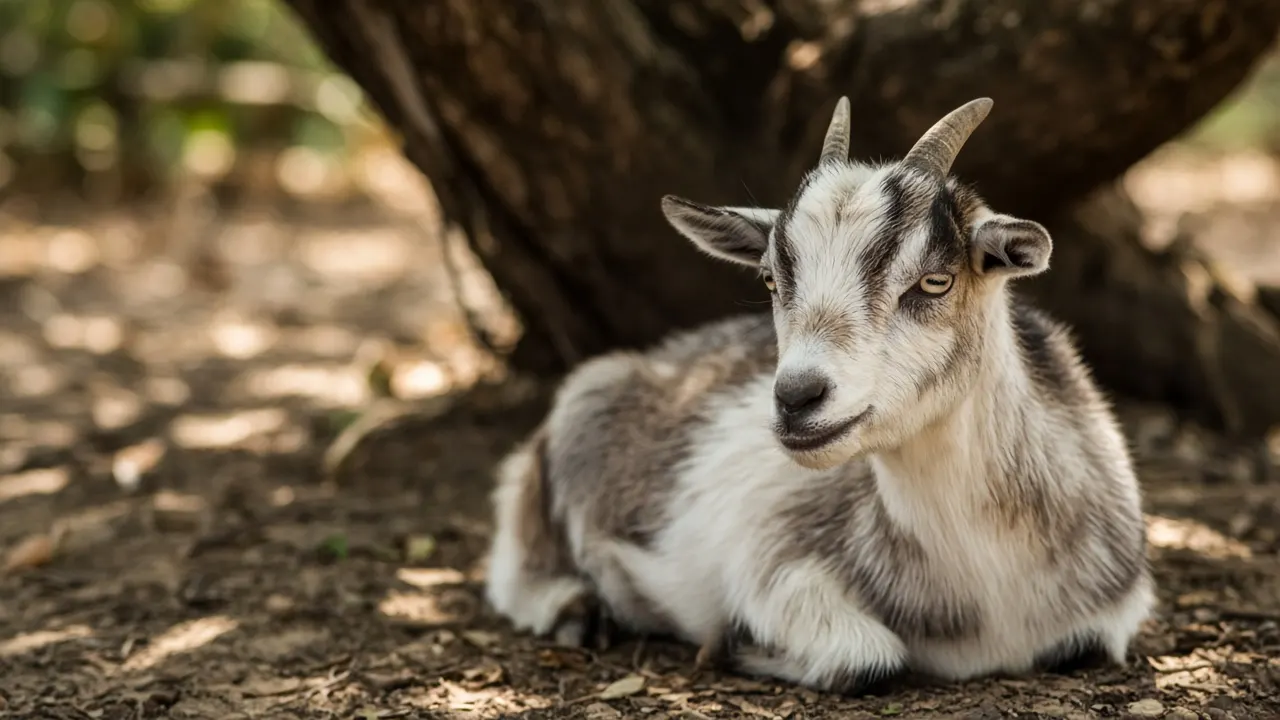
Cremation, collection and the alternatives: costs in College Station
Cremation isn't the only option, and it's worth knowing what the alternatives cost. A renderer's pickup fee typically runs about $75-$200[4] for a large animal where the service still exists, but only about 50%[5] of US states still have a rendering plant. Renting a backhoe for a deep burial costs roughly $250-$500[6]. Neither returns anything, which is why many people choose cremation for a named animal.
The full price table by size is on our Texas page, and the services page explains what each option includes.

Free tool
Cremation cost calculator
Estimate a realistic price range for your pet's size, location and the type of cremation.
Before you bury or compost in Texas
Rules for dead farm animals change more across borders than almost any other part of pet aftercare. England bans burying pet pigs, sheep and goats; many US states allow it with conditions; California even bans composting whole sheep and goats. The general notes for Texas follow. Treat them as the pet baseline and check livestock rules on top.
Texas keeps an official directory of local governments; use it to reach the county or city office that covers College Station.
We keep Texas's burial and scattering rules in one place: the Texas rules summary. Before a home burial in College Station, also ask the city whether local ordinances add anything.
What to do first, second and third
- Tell your child soon, in plain words. Saying "Your goat died this morning" beats a vaguer phrase that leaves a small child expecting the animal to turn up again.
- Let them choose whether to see the body. Covered with a blanket, with only the head showing, is usually gentle enough for school-age children.
- Give them a job: a final brush of the coat, deciding which halter to keep, or gathering flowers to put by the gate.
- Time the collection around them. One child will want to see the crew leave; another is better off at a friend's house or in class while it happens. Tell the crew you'd like a pickup with no rush.
- If the animal was a club or show project, let the leader know. This won't be the first young member they've seen through it, and they may offer a tribute at the following meeting.
- Plan something for when the ashes come home: planting a tree, scattering them beside the fence line, or a little urn for their bedroom shelf.
A lasting place for your animal near College Station
Post oak savannah and heavy clay soils around College Station turn sticky and deep after a spring storm, and a loaded trailer can bog down in a wet pasture. In the heat of July and August, a large animal must be moved within about a day. Few Texas crematories can take a horse or steer whole, so owners here often settle for removal and save a clipped forelock or a worn halter.
or look at how readers voted in our polls, try the free planning tools, Our services overview lays out every option side by side, there are guides for the big decisions and articles for the details. If you live between College Station and San Antonio, El Paso, Austin and Dallas, either page applies. Every other community in Texas, and all of the United States, is listed too.

Reader polls
What would you choose?
Vote anonymously and see how other readers answered. The results are live counts from people who visit this site, so they show real opinions, not a scientific sample.
How do you think of the animal you've lost, or are about to lose?
Tap an answer to vote and see how others answered. Anonymous.
Would you want your animal's own ashes returned?
Tap an answer to vote and see how others answered. Anonymous.
If you had to decide today, which aftercare would you choose for your pet?
Tap an answer to vote and see how others answered. Anonymous.

Free tools to help you plan
Cremation cost calculator
Estimate a realistic price range for your pet's size, location and the type of cremation.

Livestock mortality planner
Plan disposal capacity and costs for farm losses, from one animal to a herd.

Urn size calculator
Find the urn volume you need from your pet's weight, plus keepsake and sharing options.
Questions people ask
Why does the College Station page quote a human cremation rate?
Because it is the best local signal we have. NFDA 2024 Cremation & Burial Report state projections (via Occasional Sage) (2024) reports about 55.7%[1] of Texas residents are cremated. There is no official pet equivalent, and inventing one would be worse than quoting a real, clearly labelled number.
How does College Station's weather affect farm animal aftercare?
August is the hottest month in College Station, with average highs around 97°F, so prompt collection matters most then. Winters are mild, with average lows staying above freezing, so outdoor burial or scattering is usually possible year round.
Which nearby towns can I compare with College Station?
The closest communities we cover are Bryan (about 4 miles), Navasota (about 22 miles) and Brenham (about 32 miles). Providers based in those places often serve College Station too. Ask each one for a written total that includes collection, so the distance is priced in.
Can I bury my pet goat or sheep on my land in Texas?
Often yes, with conditions such as a time limit, a minimum depth and distances from wells, streams and property lines. Livestock rules usually apply to a pet goat or sheep just as they do to a herd, and cities can ban burial inside their limits. If your animal was euthanized, bury it deep or choose cremation.
Will a pet crematory near College Station take a goat or sheep?
Many will, but not all. Pet crematories are built around dogs and cats, and some cap weight at around 100 to 150 lb or don't take farm species at all. Give the species and an honest weight estimate on the first call. If the answer is no, ask who they'd recommend; they usually know which local providers take larger animals.
Should I ask for a post-mortem before cremation?
If the death was sudden and you have other animals, it's often worth it. A post-mortem can show whether parasites, poisoning or an infectious disease is putting the remaining animals at risk, and it has to happen before cremation. Ask your vet quickly, because a body that has spent a day in the heat is much harder to examine usefully.


Sources and our estimates
- [1] The NFDA projected Texas's cremation rate at 55.7% for 2024. NFDA 2024 Cremation & Burial Report state projections (via Occasional Sage), 2024.
- [2] Cremating a 1,000-pound horse was reported to cost about $600-$1,000, depending on location and the price of propane. Extension Horses (eXtension national Cooperative Extension) - Horse Disposal Options, 2019, 2019.
- [3] Embrace notes cremated remains typically weigh about 3-5% of the pet's original body weight. Embrace Pet Insurance - Bury or Cremate Your Dog? Costs, Pros & Cons, 2025.
- [4] Rendering companies typically charge a pickup fee of $75-$200 to remove a horse carcass, depending on location. Extension Horses (eXtension national Cooperative Extension) - Horse Disposal Options, 2019, 2019.
- [5] Only about 50% of U.S. states have rendering plants, most of them concentrated in the Midwest. Extension Horses (eXtension national Cooperative Extension) - Horse Disposal Options, 2019, 2019.
- [6] Renting a backhoe to bury a horse costs roughly $250-$500, and horse disposal in a landfill (where accepted) costs about $80-$150. Extension Horses (eXtension national Cooperative Extension) - Horse Disposal Options, 2019, 2019.
- [7] The average value lost per dead sheep or lamb in 2019 was about $200; for goats and kids in 2015 it was about $139. Our estimate: $121.6 million / 607,000; $69.6 million / 500,000. How we calculate.
Get farm animal cremation options near College Station
Tell us what you need and where you are. We'll reply by email with clear options and prices so you can decide in your own time.