Farm animal cremation in Daytona Beach
Whether it's a single backyard hen or a 180 lb alpaca, the questions are the same: is it legal to bury, who can collect, and can I have my own animal's ashes back? Here are the answers.
- Honest prices by body weight
- Farm collection, winch and trailer tips
- Fallen-stock and communal options too

Daytona Beach, Florida
Goats, pigs and backyard flocks in Daytona Beach
The low ground west of the Halifax River and in the St. Johns River basin can stay wet for long periods in summer and after tropical storms. Reaching a heavy body in a boggy paddock sometimes takes a winch truck rather than a trailer. The heat means time matters too. Keep a note of two or three providers who serve Volusia County so you are not searching during an emergency.
Within Daytona Beach itself, horses and farm animals are rare, but western Volusia County is a different place: pastures, small cattle herds and horse properties stretch toward DeLand and beyond, and Florida's major horse country around Ocala lies about two hours west. If your animal is kept on acreage, explain to providers how to reach the barn or paddock and whether the ground is sand, clay or grass.
A small town like Daytona Beach tends to have fewer rules about backyard animals within its limits, but that doesn't mean anything goes. Local bylaws can still ban livestock burial near houses or wells, and the wider rules for dead farm animals apply wherever you live. If you're on a small lot in town rather than acreage, cremation is usually the simplest legal path, even for a hen.
With roughly 88,471 residents, Daytona Beach is the 32nd-largest of the 235 Florida communities we cover. Orlando, roughly 51 miles off, is the closest larger centre, and a share of the providers who cover Daytona Beach run from there.
Nearby, we also have local pages for Port Orange (7 miles), Ormond Beach (7 miles) and New Smyrna Beach (13 miles), which can help if your vet or the provider you prefer is based there.
72.5%[1]
The NFDA projected Florida's cremation rate at 72.5% for 2024.
$600-$1,000[2]
Cremating a 1,000-pound horse was reported to cost about $600-$1,000, depending on location and the price of propane.
3-5% of body weight[3]
Embrace notes cremated remains typically weigh about 3-5% of the pet's original body weight.
The numbers above come from Embrace Pet Insurance and Extension Horses (eXtension national Cooperative Extension), if you'd like to read the original sources.

Cremation habits in Florida, and what they mean for your animal
About 72.5%[1] of people in Florida are cremated, so cremation feels ordinary. For small farm species the effect is practical: pet crematories are more numerous and more used to unusual requests, from a hen in a shoebox to two bonded wethers cremated together. For a larger animal, you may still need an equine or large-animal crematory, and those are spread more thinly.
We take the Florida rate from NFDA 2024 Cremation & Burial Report state projections (via Occasional Sage) (2024). It is a human statistic; there is no equivalent pet figure for Daytona Beach, and we would rather show a real number than invent one.
Heat, cold and timing in Daytona Beach
Heat affects the living animals too. In July, pigs and heavily fleeced alpacas and sheep are prone to heat stress, and a sudden death in hot weather is worth mentioning to your vet in case others are at risk. If a planned euthanasia is coming up, book it for early morning, when the barn is coolest and the collection crew has the whole day to reach you.
Daytona Beach summers are hot, with July highs averaging around 90°F. That shortens the time you have. The rumen of a goat, sheep or alpaca keeps fermenting after death, and in heat the body can bloat within hours. Move your animal into deep shade or a cool barn, lay it on its side on straw or a tarp, and cover it loosely against flies. Ask for same-day collection.
Cremation, collection and the alternatives: costs in Daytona Beach
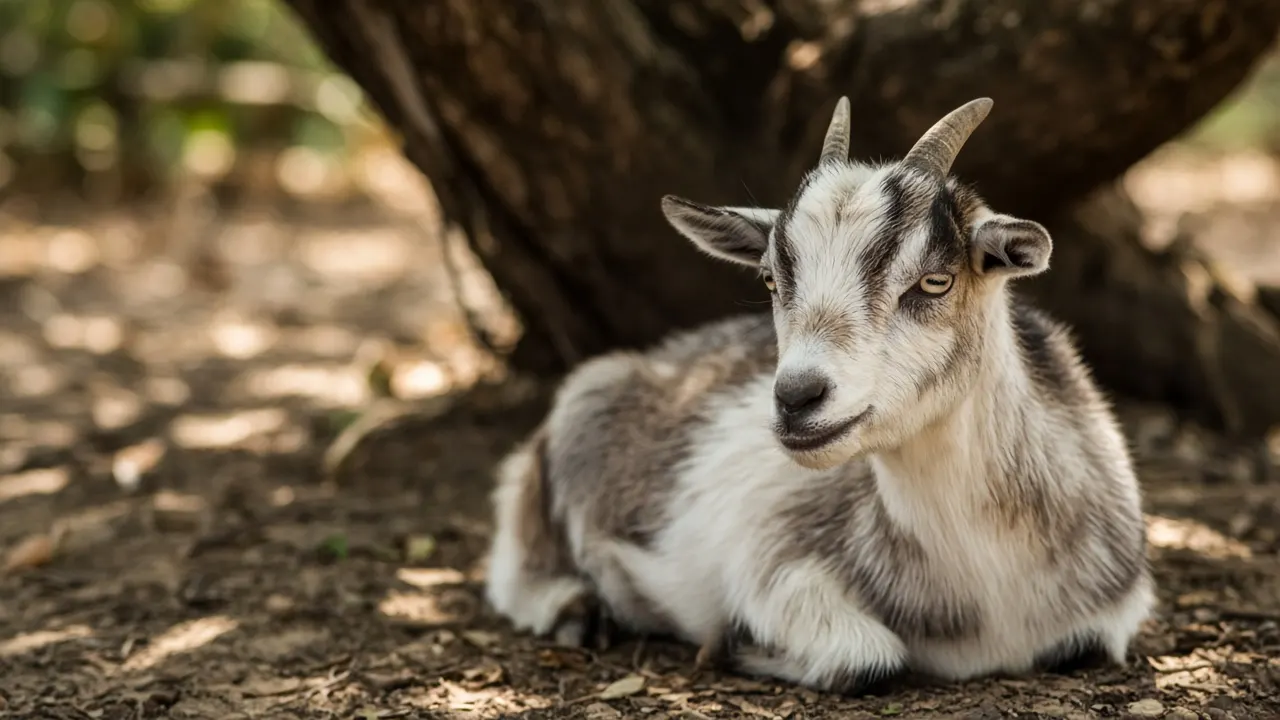
For a small backyard flock, costs are modest: a single hen falls in the smallest pet band, and many keepers choose communal cremation. For a goat or sheep, the bigger variable is collection. A crew with a winch coming out to a farm near Daytona Beach can cost as much as the cremation itself, so ask what's included before you agree.
Prices for Daytona Beach track the wider Florida market, so use the Florida price table as your baseline and the services page to see what is included.

Free tool
Cremation cost calculator
Estimate a realistic price range for your pet's size, location and the type of cremation.
Before you bury or compost in Florida
If your animal was euthanized, the drugs remain in the body and can poison scavenging wildlife, and US drug labels have warned since 2003[5] that such animals need deep burial, incineration or another approved route. That alone rules out a shallow grave. The notes below cover the general rules in Florida; cremation meets all of them.
The official Florida local government directory lists every county and city office, which is the quickest way to find who to ask in Daytona Beach.
The Florida page sets out who oversees pet cremation and what the state says about burial and scattering. Daytona Beach's own bylaws can sit on top of that, so ask before you dig.
What to do when a farm animal dies in Daytona Beach
- Check the time. In warm weather, aim to have your animal collected or delivered the same day. Ruminants bloat quickly.
- Lay the body on a tarp that's sturdy enough to pull, and prop the head up a little if you can; loading will go much more smoothly afterwards.
- Call a vet if more than one animal has died or anything seems unusual, especially in a backyard flock or a pig.
- Ring providers with the species, weight and your location. Ask about chamber size, lifting gear and the collection radius.
- Get the price in writing, and make sure it covers mileage, out-of-hours fees and any winch charge.
- Watch the others. Donkeys, alpacas and goats sometimes pace or call out for days. Hold to the usual routine and spend longer with the animal that was closest.
Keeping your goat, pig or hen close
Around Daytona Beach, large-animal owners include riders who board at stables inland, families keeping goats or a pig on a few acres, and small cattle operations. Choosing between individual cremation, a shared communal one, home burial where county rules permit, and rendering often comes down to cost and whether you want ashes back. Ask for written quotes that list each charge separately.
the guides answer the longer questions and the blog the newer ones, the planning tools turn your pet's details into figures, or see what other families chose in the poll results, For a plain comparison of the choices, open services. You can also browse every city in the United States. Nearby, we also cover Orlando, Jacksonville, Port St. Lucie and Tampa, and every city in Florida.

Reader polls
What would you choose?
Vote anonymously and see how other readers answered. The results are live counts from people who visit this site, so they show real opinions, not a scientific sample.
Before today, did you know the burial rules for farm species where you live?
Tap an answer to vote and see how others answered. Anonymous.
What was (or would be) hardest about the practical side?
Tap an answer to vote and see how others answered. Anonymous.
If you had to decide today, which aftercare would you choose for your pet?
Tap an answer to vote and see how others answered. Anonymous.

Free tools to help you plan
Cremation cost calculator
Estimate a realistic price range for your pet's size, location and the type of cremation.

Livestock mortality planner
Plan disposal capacity and costs for farm losses, from one animal to a herd.

Urn size calculator
Find the urn volume you need from your pet's weight, plus keepsake and sharing options.
Questions people ask
Why does the Daytona Beach page quote a human cremation rate?
Because it is the best local signal we have. NFDA 2024 Cremation & Burial Report state projections (via Occasional Sage) (2024) reports about 72.5%[1] of Florida residents are cremated. There is no official pet equivalent, and inventing one would be worse than quoting a real, clearly labelled number.
Where are the providers that serve Daytona Beach actually based?
Some are local, and some run from Orlando, about 51 miles away. That is normal for a town this size. What matters is the collection time they quote for Daytona Beach and whether the drive is priced into the total, so ask both up front.
Does the Daytona Beach climate change what I should do first?
Only the timing. In July, with highs near 90°F, cool the body and book collection the same day. Winters here are mild enough that burial or scattering is possible in any month.
Can a provider from a neighbouring town collect from Daytona Beach?
Usually yes. Port Orange is about 7 miles away, Ormond Beach is about 7 miles away and New Smyrna Beach is about 13 miles away, all inside a normal collection radius. Get the mileage written into the quote so there is no surprise on the day.
What if my animal dies while we're away from home?
Ask whoever is minding the farm to call your vet first and you second. Before you travel, leave written instructions: private or communal, which provider, how much you're willing to spend and any keepsake to save. A signed note lets a sitter act quickly in hot weather instead of waiting for you to pick up the phone, and it spares them guessing what you'd want.
How big an urn do I need for a goat or sheep?
Plan on roughly a cubic inch of capacity for every pound your animal weighed[6]. A 70 lb pygmy goat then needs around 70 cubic inches and a 140 lb ewe around 140, more than most standard pet urns hold. Scattering most of it? A scatter tube plus a small keepsake urn works well. Our urn size calculator will work out the numbers.


Sources and our estimates
- [1] The NFDA projected Florida's cremation rate at 72.5% for 2024. NFDA 2024 Cremation & Burial Report state projections (via Occasional Sage), 2024.
- [2] Cremating a 1,000-pound horse was reported to cost about $600-$1,000, depending on location and the price of propane. Extension Horses (eXtension national Cooperative Extension) - Horse Disposal Options, 2019, 2019.
- [3] Embrace notes cremated remains typically weigh about 3-5% of the pet's original body weight. Embrace Pet Insurance - Bury or Cremate Your Dog? Costs, Pros & Cons, 2025.
- [4] About 10,630 U.S. cattle and calves died every day in 2015. Our estimate: 3,880,000 / 365. How we calculate.
- [5] Since 2003 the FDA has required euthanasia drug labels to warn that euthanized animals must be disposed of by deep burial, incineration or another approved method to keep scavenging wildlife from eating the carcass. Cornell Waste Management Institute & Penn State - Horse Mortality: Carcass Disposal Alternatives (2012), 2003.
- [6] Using the industry rule of thumb of 1 cubic inch of urn space per pound of body weight, a 12 lb cat needs an urn of about 12 cubic inches; a 70 lb dog needs about 70 cubic inches. Our estimate: urn cu in = body weight lb x 1 (industry rule of thumb, not a measured value). How we calculate.
Find who takes farm species near you
Tell us what you need and where you are. We'll reply by email with clear options and prices so you can decide in your own time.