Goat, pig and alpaca aftercare in Georgetown, Texas
Farm species give you less time than a dog or cat, and fewer providers take them. Start here for the first few hours, the local rules and honest prices, then ask us for options by email.
- Honest prices by body weight
- Farm collection, winch and trailer tips
- Fallen-stock and communal options too
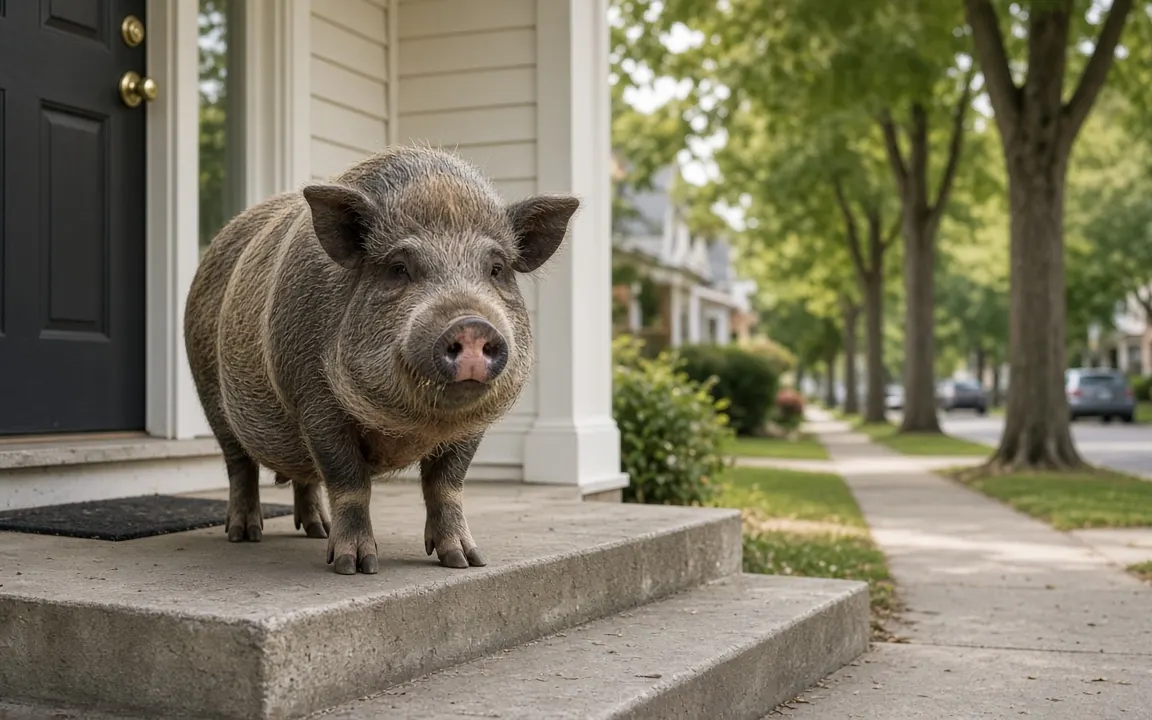
Georgetown, Texas
Hobby-farm aftercare in Georgetown: the local picture
East of Interstate 35 the country opens into Blackland farmland toward Granger and Taylor, and many small acreages keep horses, donkeys and a few head of cattle. The dark clay there clings to tires after rain and can hold a heavy truck out of a field for a day or more. During a Williamson County summer, call early and give an honest picture of the ground.
West of Georgetown, ranchland climbs into the limestone hills toward Liberty Hill and Florence, where cattle, goats and horses graze rocky pastures scattered with cedar and live oak. Bedrock often lies just inches below the grass, which rules out digging a large grave without heavy machinery. Most owners there rely on removal or rendering, keeping individual cremation for a cherished horse or a family's longest-lived animal.
Hobby farms are common on the edge of a city like Georgetown: a few acres, a handful of goats, a couple of alpacas, a small flock of hens. The people who keep them are rarely commercial farmers, so the fallen-stock systems built for dairy herds can feel impersonal. Pet crematories that accept farm species exist, but they're few, so ask your farm vet which one they use and whether it can collect from your gate.
Georgetown's population is around 106,907, the 41st-largest of the 325 Texas communities we cover. Some of the providers who serve Georgetown are based about 25 miles away in Austin, the nearest larger centre, so collection times reflect that drive.
Nearby, we also have local pages for Round Rock (9 miles), Hutto (10 miles) and Leander (11 miles), which can help if your vet or the provider you prefer is based there.
55.7%[1]
The NFDA projected Texas's cremation rate at 55.7% for 2024.
$600-$1,000[2]
Cremating a 1,000-pound horse was reported to cost about $600-$1,000, depending on location and the price of propane.
3-5% of body weight[3]
Embrace notes cremated remains typically weigh about 3-5% of the pet's original body weight.
None of the figures on this this page are ours alone: they rest on Embrace Pet Insurance and Extension Horses (eXtension national Cooperative Extension).
How Texas thinks about cremation
The cremation habit in Texas, now at roughly 55.7%[1] for people, is still spreading outward from the cities. Farm pets follow the same pattern. Keepers near town usually find cremation easy to book, while those further out may be steered towards the renderer or a backhoe by default. If cremation is what you want, ask for it by name.
The Texas percentage above is from NFDA 2024 Cremation & Burial Report state projections (via Occasional Sage) (2024) and refers to human funerals. Treat it as context for Georgetown, not as a count of pets.
What the seasons mean for farm animal aftercare in Georgetown
Georgetown summers are hot, with August highs averaging around 98°F. That shortens the time you have. The rumen of a goat, sheep or alpaca keeps fermenting after death, and in heat the body can bloat within hours. Move your animal into deep shade or a cool barn, lay it on its side on straw or a tarp, and cover it loosely against flies. Ask for same-day collection.
On a 98°F day in August, a metal trailer or pickup bed turns into an oven. If you're delivering the animal yourself, go at first light, load in shade and drive straight there. Call ahead so the crematory is ready to receive your goat or pig instead of leaving it in a hot vehicle in the yard.
How much to budget in Georgetown
Weight drives the price, and farm species cover an enormous range: a bantam hen weighs a couple of pounds, a mature kunekune can top 200. Private cremation for pets over 90 lb is listed at about $350 to $450[4], and heavier animals are usually quoted individually. As a yardstick for anything very large, horse cremation works out to roughly $0.80/lb[5].
Prices for Georgetown track the wider Texas market, so use the Texas price table as your baseline and the services page to see what is included.

Free tool
Cremation cost calculator
Estimate a realistic price range for your pet's size, location and the type of cremation.
What Texas allows for goats, sheep, pigs and poultry
Rules for dead farm animals change more across borders than almost any other part of pet aftercare. England bans burying pet pigs, sheep and goats; many US states allow it with conditions; California even bans composting whole sheep and goats. The general notes for Texas follow. Treat them as the pet baseline and check livestock rules on top.
To find your county or city office in Texas, start with the official Texas local government directory.
We keep Texas's burial and scattering rules in one place: the Texas rules summary. Before a home burial in Georgetown, also ask the city whether local ordinances add anything.
If your animal dies today: a plan for Georgetown
- Pick the spot before the vet arrives. Choose flat ground with vehicle access, like the aisle of the barn or the paddock nearest the gate, so there's little distance to move your animal once it's over.
- Book the crematory or collector first, then the vet. Once you know the pickup time, set the euthanasia an hour or two before it rather than the evening before a long wait.
- Ask the vet about sedation first. When the animal is relaxed and picking at browse or grain as the sedative takes hold, the final moment is easier on everyone around it.
- Decide who will be there. For some households, everyone stays; in others, the children go off to feed the rest of the stock and return afterwards for their own goodbye.
- Keep a companion in the next pen, within earshot but out of the way. Afterwards, if you think it would help, let it come through to look at and smell the body.
- Hand your instructions to the crew yourself: whether it's communal or private, which urn you picked, and any item you'd like back, a clipped lock of hair for instance.
Ways to remember a farm companion
Team ropers, trail riders and youth exhibitors at the Williamson County livestock show make up a large and friendly horse community around Georgetown. Ask among them and someone usually knows which removal service is reliable right now. If you want a horse cremated individually, raise it early, since very few Texas crematories can accept an animal that size and scheduling may take several days.
See what each option includes on our services page, use the free tools before you ring anyone, or look at how readers voted in our polls, the guides answer the longer questions and the blog the newer ones. More local pages: Austin, Houston, El Paso and Dallas, the Texas overview and every city in the United States.

Reader polls
What would you choose?
Vote anonymously and see how other readers answered. The results are live counts from people who visit this site, so they show real opinions, not a scientific sample.
What was (or would be) hardest about the practical side?
Tap an answer to vote and see how others answered. Anonymous.
How do you think of the animal you've lost, or are about to lose?
Tap an answer to vote and see how others answered. Anonymous.
If you had to decide today, which aftercare would you choose for your pet?
Tap an answer to vote and see how others answered. Anonymous.

Free tools to help you plan
Cremation cost calculator
Estimate a realistic price range for your pet's size, location and the type of cremation.

Livestock mortality planner
Plan disposal capacity and costs for farm losses, from one animal to a herd.

Urn size calculator
Find the urn volume you need from your pet's weight, plus keepsake and sharing options.
Questions people ask
Where are the providers that serve Georgetown actually based?
Some are local, and some run from Austin, about 25 miles away. That is normal for a city this size. What matters is the collection time they quote for Georgetown and whether the drive is priced into the total, so ask both up front.
How does Georgetown's weather affect farm animal aftercare?
August is the hottest month in Georgetown, with average highs around 98°F, so prompt collection matters most then. Winters are mild, with average lows staying above freezing, so outdoor burial or scattering is usually possible year round.
Is cremation common in Texas?
For people, yes: about 55.7%[1] of Texas deaths end in cremation, according to NFDA 2024 Cremation & Burial Report state projections (via Occasional Sage) (2024). Nobody publishes the same figure for pets, but in our experience pet choices in Georgetown follow the human pattern closely, so cremation is the default most families here start from.
Can a provider from a neighbouring town collect from Georgetown?
Usually yes. Round Rock is about 9 miles away, Hutto is about 10 miles away and Leander is about 11 miles away, all inside a normal collection radius. Get the mileage written into the quote so there is no surprise on the day.
Should I ask for a post-mortem before cremation?
If the death was sudden and you have other animals, it's often worth it. A post-mortem can show whether parasites, poisoning or an infectious disease is putting the remaining animals at risk, and it has to happen before cremation. Ask your vet quickly, because a body that has spent a day in the heat is much harder to examine usefully.
Can someone collect a dead goat or pig from a farm near Georgetown?
Yes, most crematories that take farm species offer farm collection, usually with a charge for mileage beyond a base radius. Tell them the weight, how close a vehicle can get and whether there's mud, a slope or gates. Larger animals need a winch or tail-lift, so ask what the crew brings and whether you'll need to help lift.


Sources and our estimates
- [1] The NFDA projected Texas's cremation rate at 55.7% for 2024. NFDA 2024 Cremation & Burial Report state projections (via Occasional Sage), 2024.
- [2] Cremating a 1,000-pound horse was reported to cost about $600-$1,000, depending on location and the price of propane. Extension Horses (eXtension national Cooperative Extension) - Horse Disposal Options, 2019, 2019.
- [3] Embrace notes cremated remains typically weigh about 3-5% of the pet's original body weight. Embrace Pet Insurance - Bury or Cremate Your Dog? Costs, Pros & Cons, 2025.
- [4] CareCredit lists US communal cremation at $150-$200 and private at $350-$450 for pets over 90 lb. CareCredit (Synchrony) - How Much Does Pet Cremation Cost? (Sept 2023), 2023.
- [5] Midpoint horse cremation cost works out to about $0.80 per pound of body weight, versus about $0.14 per pound for rendering pickup and $0.23 per pound for on-farm composting. Our estimate: cremation $800 / 1,000 lb; rendering $137.50 / 1,000 lb; composting $275 / 1,200 lb. How we calculate.
- [6] About 10,630 U.S. cattle and calves died every day in 2015. Our estimate: 3,880,000 / 365. How we calculate.
Get farm animal cremation options near Georgetown
Tell us what you need and where you are. We'll reply by email with clear options and prices so you can decide in your own time.