Bringing your farm pet's ashes home in Warren
Your goat, sheep or pig is family, but the law usually files it under livestock. Here's what that means locally, who will take an animal this size and what it costs to bring the ashes home.
- Weight limits checked before you load
- Written totals including mileage
- No pressure, just clear local options
Warren, Michigan
Where farm species go after a death near Warren
Warren itself is suburban and industrial, with almost no large animals. Northern Macomb County around Romeo, Armada and Washington Township still has orchards, horse barns and small farms with goats, sheep, pigs and alpacas, and the Armada Fair shows how much farm life remains nearby. When a large animal dies there, describe the access and the animal's size when you ask for help.
Metro Detroit offers more providers than rural Michigan, but few cremate horses and large farm animals individually. If you keep an older horse, a donkey or a small herd in northern Macomb or neighboring counties, ask ahead about euthanasia planning, collection and cremation. Having options and rough costs in hand before the day makes a hard time in the barn easier to manage.
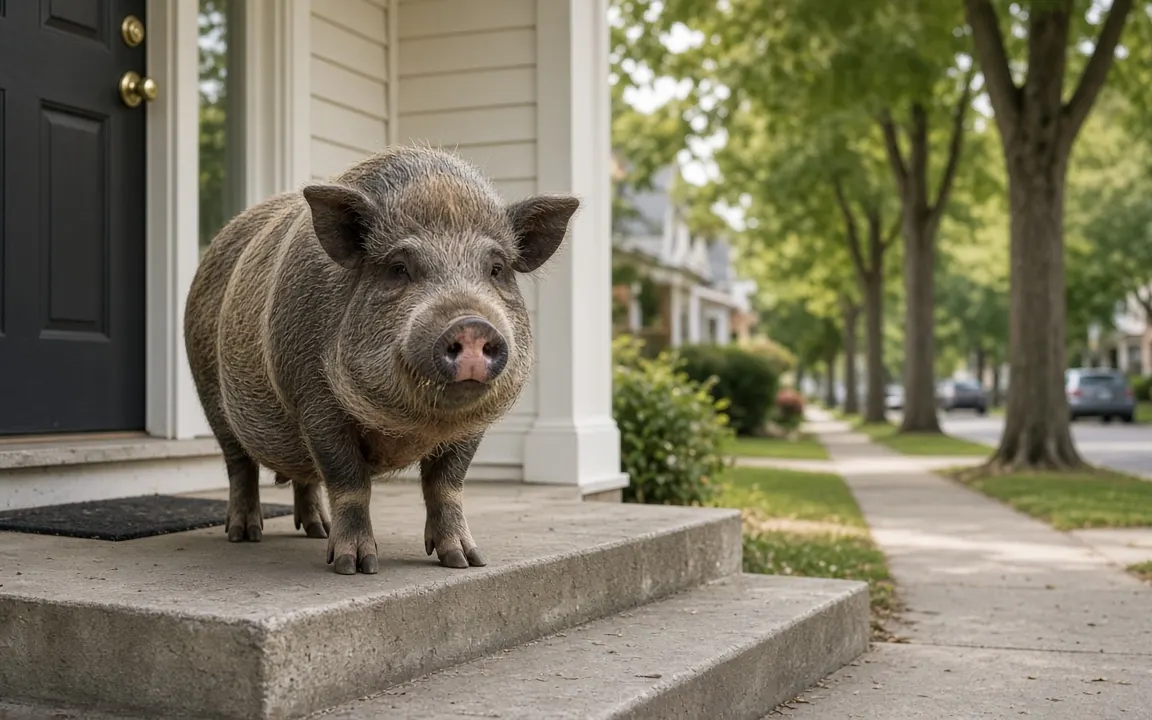
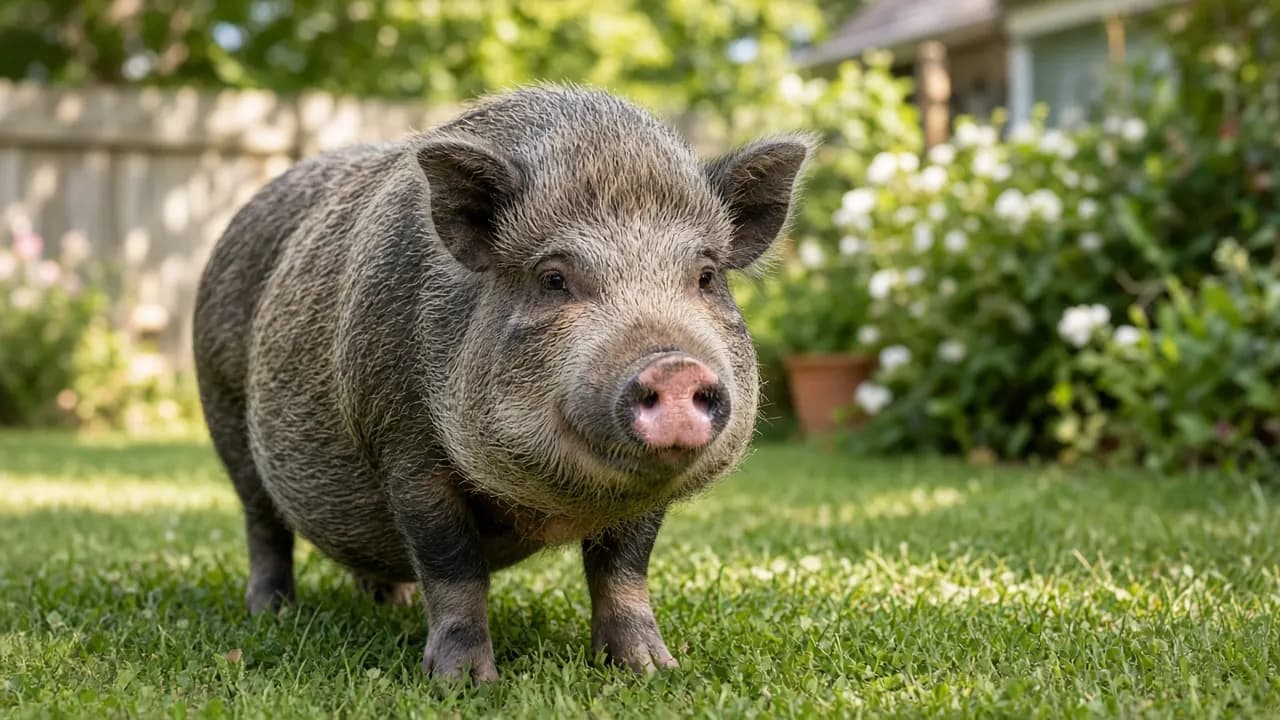
Around Warren, pet pigs raise problems goats don't. A pig is dense for its size, carries its weight low and has no horns or fleece to hold, so lifting one takes a sling or board and three people rather than two. Say it's a pig when you book, so the crew brings the right equipment the first time.
Warren is home to about 137,138 people, the 3rd-largest of the 63 Michigan communities we cover. Detroit, roughly 11 miles off, is the closest larger centre, and a share of the providers who cover Warren run from there.
Families in Warren often end up using a provider from Madison Heights (4 miles), Eastpointe (4 miles) and Roseville (5 miles). That is normal: crematories serve a radius, not a single town, and the drive is priced into collection.
69.5%[1]
The NFDA projected Michigan's cremation rate at 69.5% for 2024.
$600-$1,000[2]
Cremating a 1,000-pound horse was reported to cost about $600-$1,000, depending on location and the price of propane.
3-5% of body weight[3]
Embrace notes cremated remains typically weigh about 3-5% of the pet's original body weight.
We built the this numbers from Extension Horses (eXtension national Cooperative Extension) and Embrace Pet Insurance, and both are worth a look if you want the detail.
Local customs, and where a farm pet fits
About 69.5%[1] of people in Michigan are cremated, and the figure has been climbing for years. Farm animal aftercare has followed at its own pace. Burial on the farm is still common for stock, but more families now choose cremation for the animals they named: the pet goat, the old ewe, the pig that followed the children around the yard.
The Michigan figure comes from NFDA 2024 Cremation & Burial Report state projections (via Occasional Sage) (2024). It describes people, not pets, so read it as a sign of local attitudes rather than a pet statistic.
What the seasons mean for farm animal aftercare in Warren
Snow and ice can delay collection, especially from farm tracks. If a winter storm is forecast and one of your animals is very old or unwell, ask your vet now what the plan would be. A body kept in an unheated shed stays in good condition for longer in the cold, but it can freeze to the ground or to bedding, so lay it on a tarp you can drag.
Composting, which many farms use for dead stock, slows right down in cold weather. Extension guidance says a carcass pile needs to reach 135-140 F[4] to work properly, and a pile started in the middle of a Warren winter may struggle to heat up without plenty of dry bedding. For a single named animal, most people find cremation simpler than managing a pile through the freeze.

Cremation, collection and the alternatives: costs in Warren
Expect the total in Warren to depend on four things: your animal's weight, private or communal, how the animal gets to the crematory and what the ashes come back in. Communal cremation, where nothing is returned, usually costs half or less. If you can deliver the animal yourself, the collection line on the quote may disappear altogether.
Rather than repeat the price table on every city page, we keep one for Michigan: Michigan costs. What each service includes is on the services page.

Free tool
Cremation cost calculator
Estimate a realistic price range for your pet's size, location and the type of cremation.
Livestock law and pet rules in Michigan
Composting is an approved route for dead stock in many places: in the 2014–2015 US bird flu outbreak it handled 85%[6] of poultry carcasses, according to the EPA. But it isn't allowed for every species everywhere, and a pile needs careful management. The pet-level picture for Michigan is below; check the livestock rules before you build one.
To find your county or city office in Michigan, start with the official Michigan local government directory.
The Michigan page sets out who oversees pet cremation and what the state says about burial and scattering. Warren's own bylaws can sit on top of that, so ask before you dig.
A practical checklist for smallholders in Warren
- Say goodbye in your own way. Even when the farm is busy, you can find a few unhurried minutes in the paddock or barn.
- Keep the body shaded, covered and away from dogs and scavengers while you make calls.
- Find a provider that takes your species at its weight. Ask your vet who they use nearby, or let us send you local options.
- Choose private, communal or collection, and ask for written confirmation of which one you've booked.
- Decide how the animal gets there. Collection from the farm costs extra; taking it in your own pickup or trailer often cuts the bill a good deal.
- Plan where the ashes will go. There's no rush to settle it today; plenty of keepers hold off on scattering until an anniversary or a change of season.
Ashes, fleece and memories on the farm
Michigan winters shape large animal aftercare. Frozen ground rules out burial for months, snow can block farm lanes, and spring thaw turns pastures to mud. In summer, heat means arrangements need to be made quickly. Commercial livestock is handled under Michigan rules. For a horse, pony, pet goat or sanctuary animal, individual cremation may be possible, so explain the animal's role.
browse in-depth guides or recent articles, or see what other families chose in the poll results, use the free tools before you ring anyone, See what each option includes on our services page. You can also browse every city in the United States. Nearby, we also cover Sterling Heights, Dearborn, Lansing and Grand Rapids, and every city in Michigan.

Reader polls
What would you choose?
Vote anonymously and see how other readers answered. The results are live counts from people who visit this site, so they show real opinions, not a scientific sample.
How do you think of the animal you've lost, or are about to lose?
Tap an answer to vote and see how others answered. Anonymous.
What was (or would be) hardest about the practical side?
Tap an answer to vote and see how others answered. Anonymous.
If you had to decide today, which aftercare would you choose for your pet?
Tap an answer to vote and see how others answered. Anonymous.

Free tools to help you plan
Cremation cost calculator
Estimate a realistic price range for your pet's size, location and the type of cremation.

Livestock mortality planner
Plan disposal capacity and costs for farm losses, from one animal to a herd.

Urn size calculator
Find the urn volume you need from your pet's weight, plus keepsake and sharing options.
Questions people ask
Will I have to travel to Detroit to arrange things?
Not usually. Providers based in Detroit (roughly 11 miles from Warren) collect from here as a matter of routine, and the paperwork is done by email or phone. If you want to be present for a witnessed cremation, that is when the drive matters.
Which nearby towns can I compare with Warren?
The closest communities we cover are Madison Heights (about 4 miles), Eastpointe (about 4 miles) and Roseville (about 5 miles). Providers based in those places often serve Warren too. Ask each one for a written total that includes collection, so the distance is priced in.
Why does the Warren page quote a human cremation rate?
Because it is the best local signal we have. NFDA 2024 Cremation & Burial Report state projections (via Occasional Sage) (2024) reports about 69.5%[1] of Michigan residents are cremated. There is no official pet equivalent, and inventing one would be worse than quoting a real, clearly labelled number.
Does the Warren climate change what I should do first?
Only the timing. In July, with highs near 84°F, cool the body and book collection the same day. In January, February, March and December, when lows sit below freezing, a home burial may have to wait for a thaw, so cremation with ashes returned keeps your options open.
How long can I leave a dead goat or sheep before it's collected?
Not long. The rumen keeps fermenting after death, so goats, sheep and alpacas can bloat within hours in warm weather. Many US states expect dead livestock to be dealt with within 24-72 hours[7]. Keep the body shaded and loosely covered, and book collection or delivery the same day if you can.
Is it normal to lose goats or sheep every year?
Sadly, yes. The USDA counted about 500,000 head[8] of adult goats and kids dying in the US in 2015, and sheep producers lost 6.8% of their flocks in 2019[9]. Losses come with keeping stock, which is why many smallholders plan aftercare early. Our livestock mortality planner helps you think it through.


Sources and our estimates
- [1] The NFDA projected Michigan's cremation rate at 69.5% for 2024. NFDA 2024 Cremation & Burial Report state projections (via Occasional Sage), 2024.
- [2] Cremating a 1,000-pound horse was reported to cost about $600-$1,000, depending on location and the price of propane. Extension Horses (eXtension national Cooperative Extension) - Horse Disposal Options, 2019, 2019.
- [3] Embrace notes cremated remains typically weigh about 3-5% of the pet's original body weight. Embrace Pet Insurance - Bury or Cremate Your Dog? Costs, Pros & Cons, 2025.
- [4] A carcass compost pile should reach 135-140 F within 15 days and be held at temperature for 3-12 weeks. USDA APHIS / Center for Food Security and Public Health (Iowa State) - Disposal: Composting, Rendering & Burial handout, based on NAHEMS Disposal Guidelines (2012), 2012.
- [5] The average value lost per dead sheep or lamb in 2019 was about $200; for goats and kids in 2015 it was about $139. Our estimate: $121.6 million / 607,000; $69.6 million / 500,000. How we calculate.
- [6] Composting was used for 85% of poultry carcasses in the 2014-2015 U.S. HPAI outbreak; EPA lists composting and permitted landfills as the preferred disposal methods. U.S. EPA - Carcass Management During Avian Influenza Outbreaks, 2015.
- [7] State rules commonly require dead animals to be buried within 24 to 72 hours of death, especially when euthanized. Cornell Waste Management Institute & Penn State - Horse Mortality: Carcass Disposal Alternatives (2012), 2012.
- [8] About 500,000 U.S. adult goats and kids died in 2015, equal to 9.8% of the adult goat inventory and 19.4% of kids born; losses were valued at $69.6 million. USDA APHIS NAHMS - Goat and Kid Predator and Nonpredator Death Loss in the United States, 2015, 2015.
- [9] In 2019, 6.8% of U.S. sheep inventory and 12.0% of the lamb crop were lost to death; predators caused 32.6% of sheep losses and 40.1% of lamb losses. USDA APHIS NAHMS - Death Loss Trends in the U.S. Sheep Industry: 1994-2019 (Sheep Death Loss 2020, published June 2022), 2019.
Tell us about your goat, sheep, pig or bird
Tell us what you need and where you are. We'll reply by email with clear options and prices so you can decide in your own time.