Grieving a goat, pig, donkey or hen that was never "just livestock"
Losing a named farm animal can hurt as much as losing a dog, and people around you may not see it. In a UK survey of bereaved owners, 57.1%[1] felt they had to hide their grief.
By the Farm Animal Cremation Services editorial team · Updated September 24, 2026 · 6 min read · Sources
- Why feeding time can be the hardest part
- Caring for the herd mate who's left behind
- Guilt, predator losses and when to add a companion
The short answer
Is it normal to grieve this hard for a farm animal?
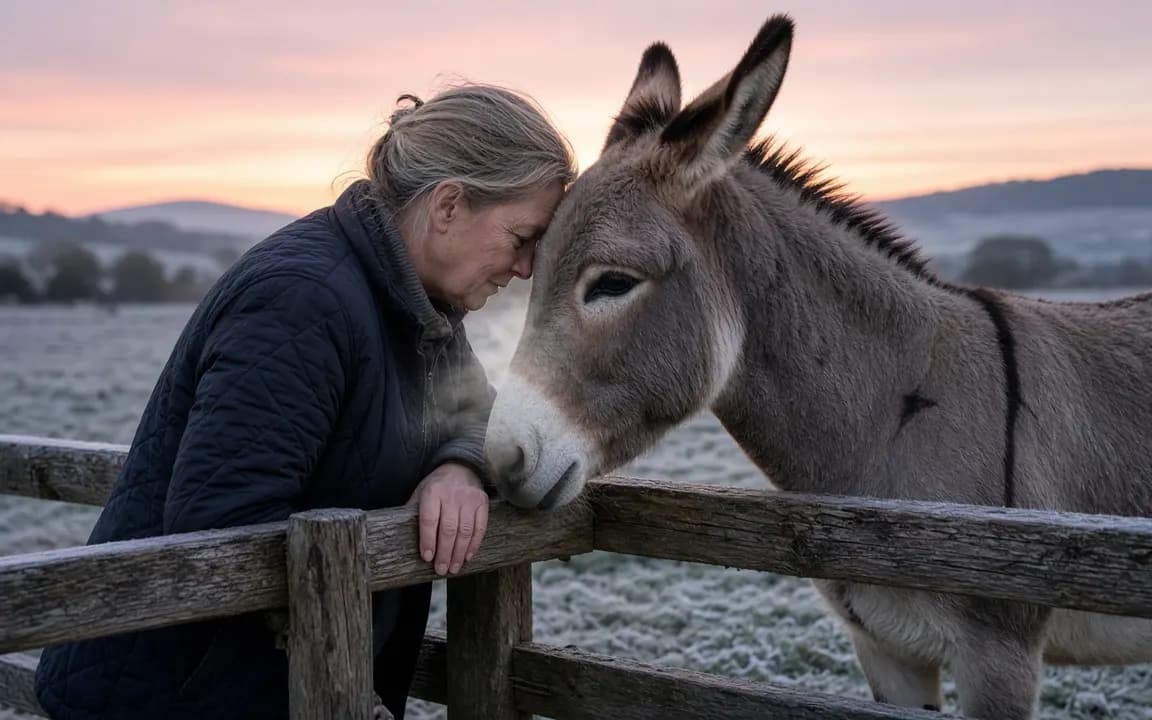
Yes. Grief follows the bond, not the species. Research comparing pet and human losses found that closeness to the one who died was the strongest predictor of how hard grief hits[2], and few relationships are closer than an animal you've fed, doctored and talked to every day for a decade.
Farm companions also live long lives alongside you. A pet goat can reach its mid-teens, a pot-bellied pig often lives 12 to 18 years, and donkeys commonly pass 30. If you've had a donkey since before your kids were born, losing her ends a chapter of your life, not just a line in the herd book.
What makes farm-animal grief distinctive is the setting. The loss happens in the middle of a working place: other animals still need you at six, the body is heavy and has to be moved, and neighbors may treat it as routine. This article covers the grief itself. For the practical side, see every aftercare option for farm species.
Disenfranchised grief
Why do people say "it's just livestock," and how do you answer?
Grief that other people don't recognize has a name: disenfranchised grief. Farm animals attract more of it than dogs or cats because the same species sits in the meat aisle. 34.5%[3] of bereaved owners in the RSPCA's pet bereavement survey were told "it's just a pet," and a goat or pig owner can expect a sharper version from people who raise stock commercially.
You don't have to win the argument. A short reply saves energy: "She was a pet to us. We had her 11 years." Then find the people who do understand. Other smallholders, your vet's team, the feed-store regular who asked after her last month, and online keepers' groups for your species are usually kinder than the general public.
57.1%[1]
Giving the animal a proper farewell can also make the loss visible, to yourself as much as anyone. Individual cremation with the ashes returned, a marker in a farm memorial corner or a small gathering at the paddock gate all say this animal mattered.
Routine as a trigger
Why are morning chores the hardest part?
Because they were your time together. Scooping one less ration, walking past a stall that's too clean, counting hens on the roost and coming up one short: these moments catch people off guard for weeks. In the RSPCA survey, 72.6% of bereaved owners said they lost their daily routine or sense of purpose[4]. On a farm, the routine carries on, but with a hole in it.
- Change one small thing. Move the feed bins, walk a different route to the barn or swap chores with a partner for a week.
- Deal with the stall on your timetable. Some people muck out and rebed straight away; others leave it for a few days. Neither is wrong.
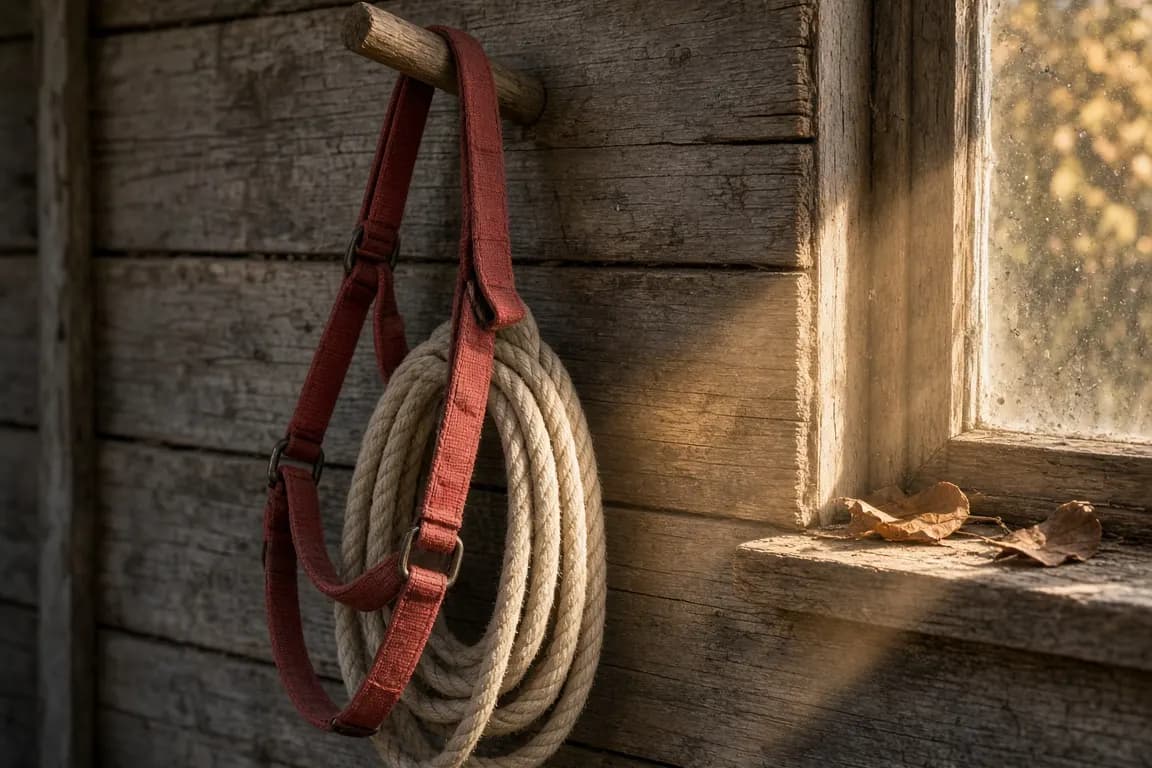
- Keep one object where it was. A halter on its peg or a collar on the gate can feel like company rather than a wound.
- Plan for the dates. The first kidding season, shearing day or the anniversary of her arrival will sting. Put something gentle on the calendar.
The ones left behind
Is the rest of the herd grieving too?
Often, yes, or at least they're distressed by the change. Goats may call for hours and hang around the spot where a companion lay. Alpacas and llamas can become anxious and huddle more tightly; our article on alpaca and llama aftercare covers letting the herd see the body. Bonded donkeys are known for it: a donkey that loses its pair may stand at the gate, stop eating or go quiet. This needs more than sympathy.
Many keepers let the closest herd mate see and sniff the body before it leaves. There isn't much formal research, but experienced keepers widely report that animals who were allowed this settle faster than ones whose friend simply vanished. It only takes a few minutes, and it happens before the collector arrives, so fit it into your plan.
Did you let the rest of the herd or flock see the body before it left?
Tap an answer to vote and see how others answered. Anonymous.
For the next week, spend extra time with the survivor. Brush them, sit in the pen with a coffee, and keep feeding and turnout times exactly as before. You may find looking after them helps you as much as it helps them.
The heaviest part
How do you live with guilt after a predator loss or euthanasia?
Guilt is the most common passenger on this road, and farm deaths give it plenty to work with. A fox in the coop, a coyote through a fence, a goat that bloated overnight, a pig you think you should have noticed was off her feed sooner. Predators are one of the main causes of death in small ruminants: they caused 32.6% of US sheep losses in 2019[5]. Experienced shepherds with good fencing lose animals too.
Euthanasia guilt pulls the other way: did I choose too early, or too late? A 2025 study of 123 bereaved owners found those whose pets were euthanized reported less guilt but more grief than those whose pets died without it[6]. The same research linked stronger grief to regret over timing and to feeling left out of the decision by the vet[7]. If you're haunted by timing, ask your vet to go through the decision again with you; many are glad to.
- Write down what you knew at the time, not what you know now.
- Separate a fixable lesson (a better latch, an earlier vet call) from blame.
- Say the guilty thought to someone out loud. It usually sounds less true outside your head.
You made the call with the information you had on the day she needed you. That was love, even if it doesn't feel like it yet.
Herd animals can't wait long
When should you bring in a new companion?
Sooner than you might for a dog, if the survivor is now alone. Goats, sheep, alpacas, llamas and donkeys are herd animals and do poorly by themselves; a lone goat or alpaca can become stressed, loud and prone to escape. Most keepers aim to have a companion in place within days or a few weeks, depending on how the survivor copes.
That can feel like betrayal. It helps to see it as caring for the animal who's still here, not replacing the one who died. Some owners take a short-term loan of a friendly wether or an older donkey from a rescue while they decide. Match species and temperament where you can: a donkey usually does better with another donkey than with a pony, and alpacas should not be kept as a single animal.
For your own sake, there's no timetable. If the new arrival is a practical need rather than your heart's choice, give yourself permission not to bond straight away. If you're weighing the long-term costs of another animal, our hobby-farm companion cost guide is a useful reality check, and planning aftercare while animals are well makes the next goodbye less frantic.
Getting help
Where can you find support, and when is grief more than grief?
Most people find grief softens over weeks and months, though not in a straight line. It can last longer than expected: nearly one in three owners in a US study grieved for at least six months[8]. In a UK study published in PLOS ONE, 7.5%[9] of adults bereaved of a pet met criteria for prolonged grief disorder, where grief stays intense and disabling for a long time.
By our estimate, applying that rate to US pet cremations suggests about 110,000 owners a year[10] may go on to meet the criteria for prolonged grief. Farm keepers are part of that group, even if nobody counts them.
If you can't sleep, can't face the barn for weeks or are struggling to get through work, talk to your doctor. Free lines exist too: Cornell's Pet Loss Support Hotline is staffed by trained veterinary students[11], and it doesn't matter to them whether the animal was a goat or a golden retriever.
Physical remembrance helps many keepers. Price a marker, planting or urn with the memorial budget planner, or browse outdoor memorial ideas for farm companions. If children are grieving alongside you, our guide to talking with kids about a farm animal's death has words that help.

Free tool
Memorial budget planner
Add up cremation, urn, keepsakes and a farewell so the total holds no surprises.
When you're ready to arrange aftercare, send us a few details and we'll reply by email with options near you. You can see how other keepers answered 'what was hardest' on our poll results page, and find providers through our local pages.

Reader polls
What would you choose?
Vote anonymously and see how other readers answered. The results are live counts from people who visit this site, so they show real opinions, not a scientific sample.
What was (or would be) hardest about the practical side?
Tap an answer to vote and see how others answered. Anonymous.
What was the hardest part of losing your pet?
Tap an answer to vote and see how others answered. Anonymous.
How long before you felt ready for another pet?
Tap an answer to vote and see how others answered. Anonymous.


Questions people ask
How long does grief for a farm animal usually last?
There's no set length. Many people feel the sharpest pain for a few weeks, then waves around chores, seasons and anniversaries for months. Research on pet owners found nearly a third grieved for at least six months. If grief is still stopping you from working, sleeping or caring for your other animals after several months, talk to a doctor.
Do goats grieve when a herd mate dies?
Many keepers see clear signs: repeated calling, searching, staying near where the companion lay and eating less for a few days. Letting the closest goat sniff the body before collection seems to help some settle. Keep routines steady, and add a companion quickly if a goat is left alone, since goats are herd animals and struggle in isolation.
Can a donkey die of grief?
Not of sadness itself, but stress-related loss of appetite can trigger hyperlipemia in donkeys, which can be fatal. That's why a donkey that stops eating after losing its companion needs a vet promptly. Keeping the survivor's routine the same, giving extra attention and arranging a new companion soon all lower the risk.
Is it wrong to feel relieved after a long illness?
No. Months of nursing an elderly goat through arthritis or a pig through repeated infections are exhausting. Relief that the suffering, and the nightly checks, are over sits alongside grief for most carers. Feeling lighter doesn't mean you loved them less. It means you'd been carrying a lot.
Should I take time off work after my pet pig dies?
If you can, a day or two helps, especially if you need to arrange collection or be home for the herd. Few employers offer pet-loss leave, so you may need to use personal or vacation time. Tell your manager plainly that a long-term animal companion has died; people who keep animals themselves often understand more than you'd expect.
What can I say to a friend who lost their goat or hen?
Use the animal's name and say you're sorry. "I'm so sorry about Hazel. I know how much time you spent with her" is enough. Avoid "at least you have others" or anything that compares her to livestock. Offering practical help, such as doing an evening feed or helping move the body, is often the kindest thing.


Sources and our estimates
- [1] 57.1% felt they had to hide their grief after a pet died, and 57.8% perceive stigma around pet loss. RSPCA — Pet Loss Survey Results, 2026.
- [2] A Death Studies paper comparing pet and human loss found closeness to the deceased was overwhelmingly the strongest predictor of grief severity, whatever the species. Europe PMC abstract — Eckerd, Barnett & Jett-Dias, 'Grief following pet and human loss: Closeness is key', Death Studies (2016), doi:10.1080/07481187.2016.1139014, 2016.
- [3] 34.5% of bereaved pet owners were told 'it's just a pet'. RSPCA — Pet Loss Survey Results, 2026.
- [4] After losing a pet, 72.6% lost their daily routine or sense of purpose, 69.8% had trouble concentrating and 65.9% had sleep problems. RSPCA — Pet Loss Survey Results, 2026.
- [5] In 2019, 6.8% of U.S. sheep inventory and 12.0% of the lamb crop were lost to death; predators caused 32.6% of sheep losses and 40.1% of lamb losses. USDA APHIS NAHMS - Death Loss Trends in the U.S. Sheep Industry: 1994-2019 (Sheep Death Loss 2020, published June 2022), 2019.
- [6] A 2025 study of 123 bereaved pet owners found owners of euthanized pets felt less guilt but more grief than owners whose pets died without euthanasia. 'Euthanasia and prolonged grief: A cross-sectional study with bereaved pet owners', Journal of Veterinary Behavior 79:60-67 (2025), Univ. of Lisbon research portal, 2025.
- [7] In the 2025 euthanasia-and-grief study, grief intensity rose with feeling excluded from the euthanasia decision by the vet and with regret over euthanizing too early; perceived emotional support from the veterinary team was linked to less guilt. 'Euthanasia and prolonged grief: A cross-sectional study with bereaved pet owners', Journal of Veterinary Behavior 79:60-67 (2025), Univ. of Lisbon research portal, 2025.
- [8] A 2009 Bulletin of the Menninger Clinic study of 106 pet owners found nearly 1 in 3 grieved for at least six months. SHRM — Grieving a Pet's Death: Should Workers Get Time Off? (2016), 2009.
- [9] 7.5% of UK adults whose bereavement was the death of a pet met criteria for prolonged grief disorder (PGD). Hyland et al., 'No pets allowed: Evidence that prolonged grief disorder can occur following the death of a pet', PLOS ONE (2026), 2026.
- [10] Each year about 110,000 U.S. pet owners may go on to meet prolonged grief disorder criteria after a pet dies. Our estimate: 1.5M pet cremations (proxy for pet deaths with an engaged owner) x 7.5% PGD rate. How we calculate.
- [11] Cornell's free Pet Loss Support Hotline (607-218-7457) is staffed by veterinary students trained by professional grief counselors. Cornell University College of Veterinary Medicine, 2026.
Get gentle aftercare options for your animal
Tell us what you need and where you are. We'll reply by email with clear options and prices so you can decide in your own time.